The hallway is the first space guests see and the last one you pass through every day, yet it is often the most neglected room in the house. Bare walls and a forgotten light fixture make it feel like a corridor rather than a part of your home. With a little thought, though, a hallway can become one of the most charming spots in the house, setting the tone for everything beyond it. Wall decor is the easiest way to get there, because it needs no floor space and no renovation.
The ideas below work for narrow entry halls, long corridors, and wide landings alike. Some take an afternoon and a hammer, others take only a hook and a frame. Mix the ones that suit your style and your hallway’s shape, and remember that a hallway should feel welcoming, not crowded. A few well-chosen pieces will do far more than a wall covered end to end.
1. Create a Gallery Wall of Family Photos
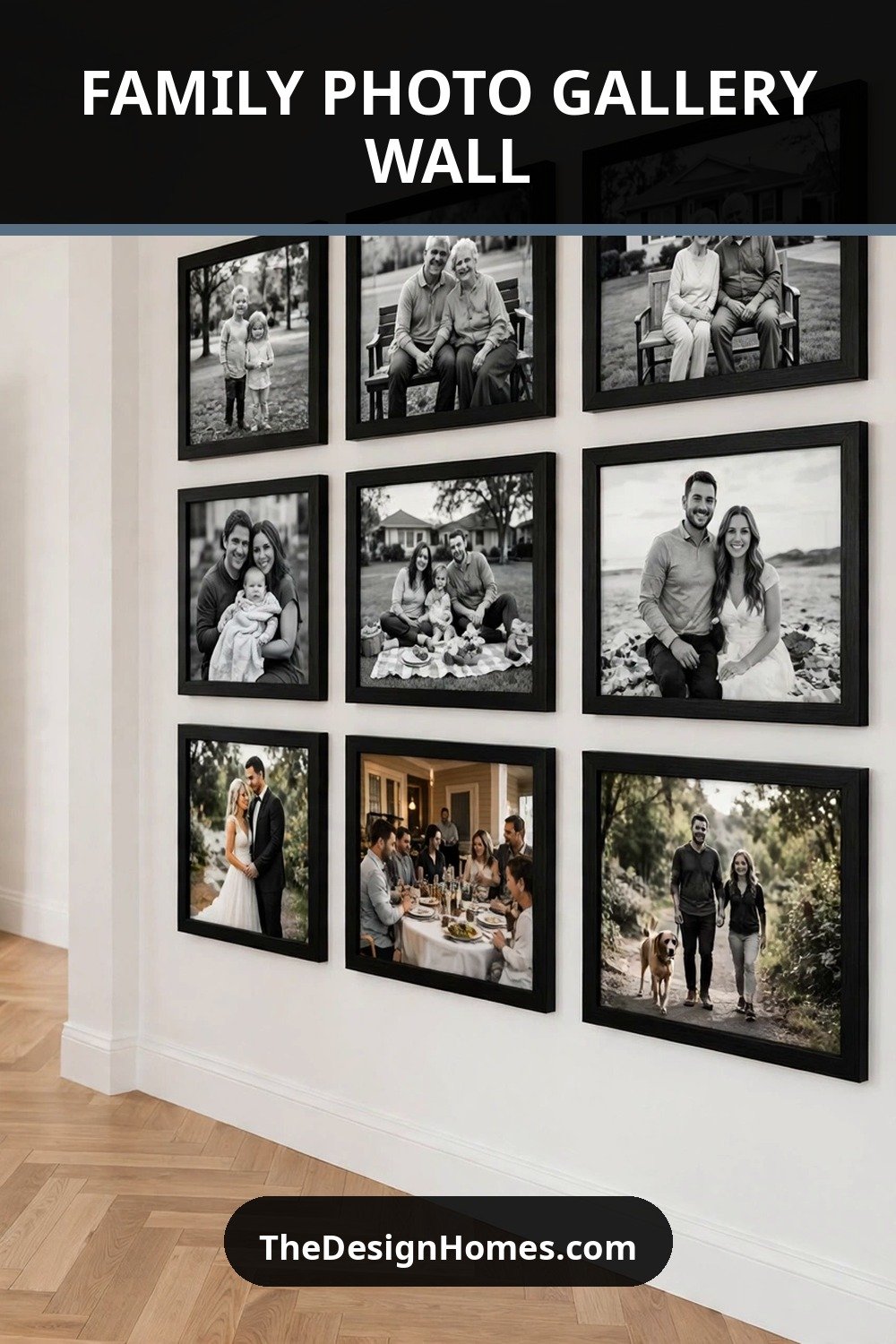
A gallery wall turns a plain hallway into a personal story. Gather favourite family photos, holiday snapshots, and candid moments, then print them in a mix of sizes and arrange them in matching or mixed frames. A grid layout feels calm and orderly, while a salon-style cluster feels relaxed and collected over time. Either way, the hallway becomes a place where guests naturally slow down to look.
Lay the frames on the floor and try a few arrangements before you put any nails in the wall. Keep the spacing even, about two to three inches between frames, and hang the centre at eye level. Black and white prints give a cohesive look even when the photos span many years, and matching frames tie different images together.
2. Hang a Large Statement Mirror
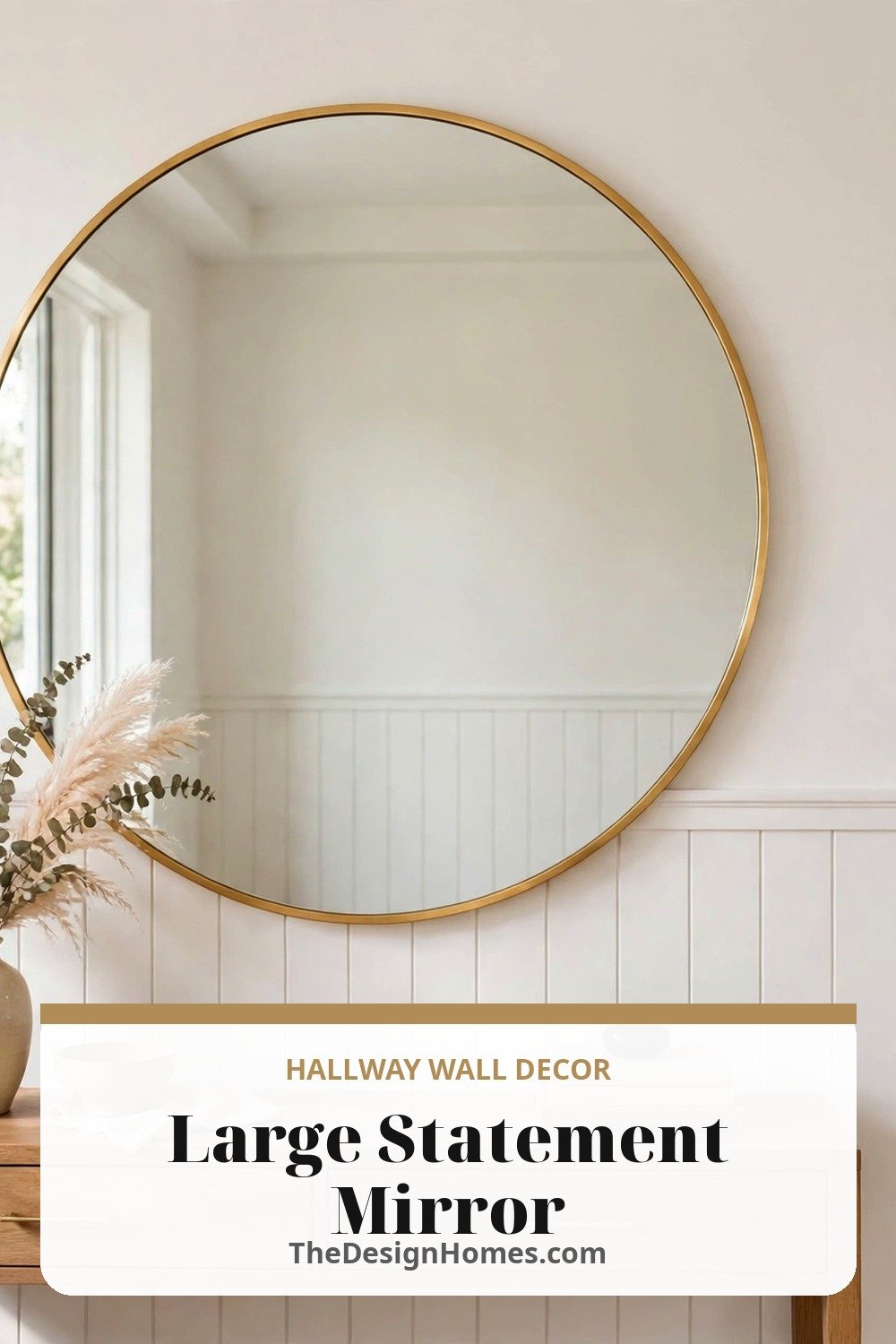
A large mirror is one of the smartest pieces of hallway wall decor, because it does two jobs at once. It reflects light into a space that is often dark and windowless, and it makes a narrow hallway feel wider and more open. A round mirror softens a long straight corridor, while a tall arched mirror adds elegance and draws the eye upward. Choose a frame that matches your home, from slim black metal to warm wood or ornate gold.
Hang the mirror where it catches light from a nearby room or doorway. Avoid hanging it directly opposite a cluttered room, since it will double whatever it reflects. A mirror above a console table is a classic pairing that anchors the whole arrangement and instantly makes the hallway feel brighter and bigger.
3. Add Floating Shelves for Display

Floating shelves give you a place to display small treasures without taking up any floor space. One long shelf or two short ones can hold framed prints, tiny plants, candles, and souvenirs from your travels. Because the shelves are shallow, they work even in the narrowest hallway, and you can change the display with the seasons or whenever you fancy a refresh. A shelf also breaks up a long blank wall and gives the eye somewhere to rest.
Style the shelf in odd numbers, grouping items in threes and varying their heights for a natural look. Leave breathing room between objects so the shelf feels curated rather than crowded. Secure the shelves properly into wall studs, especially for anything heavy.
4. Try a Bold Accent Wall Colour
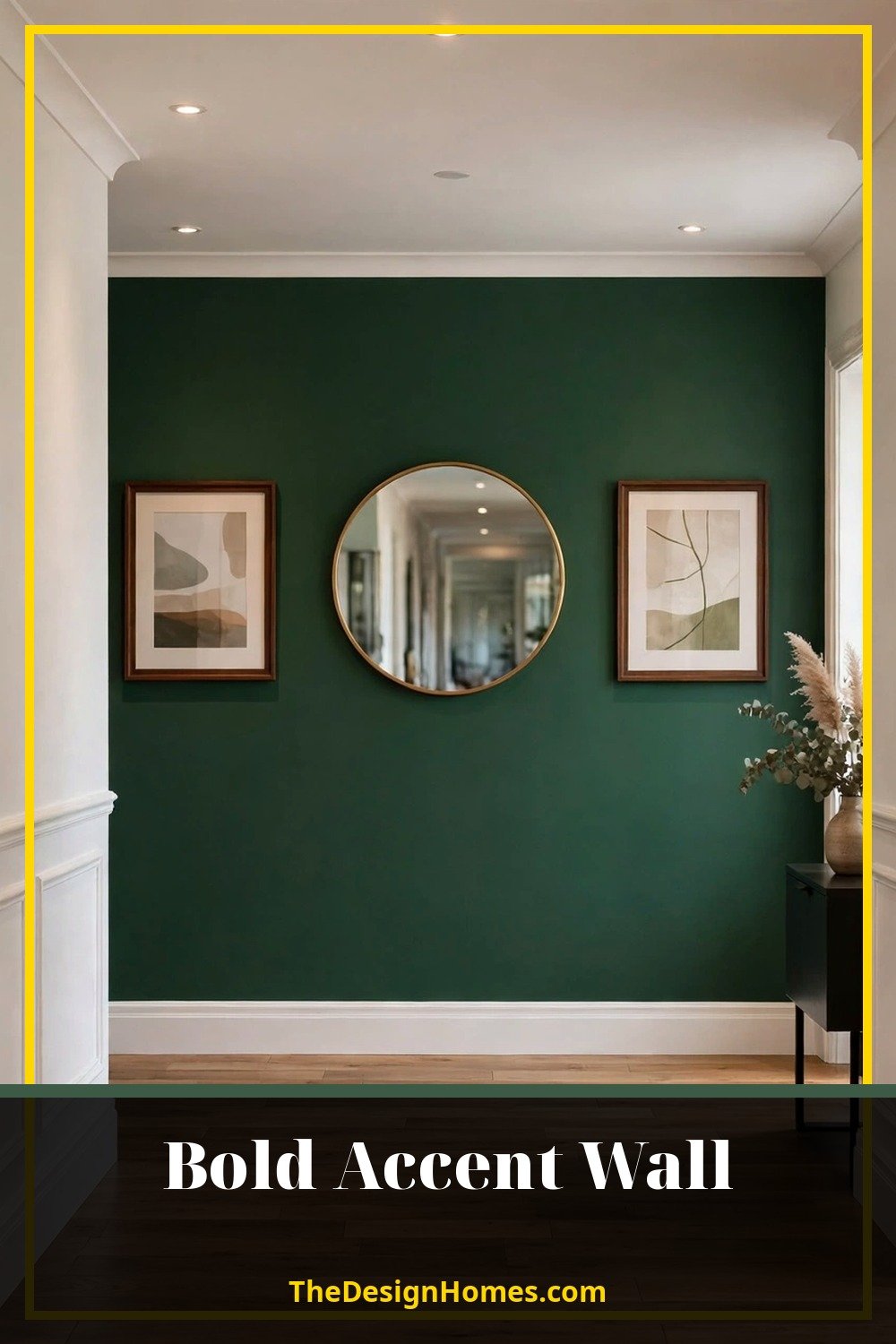
Paint is the fastest way to transform a hallway, and one bold accent wall is all it takes. A deep green, navy, or warm terracotta wall adds drama and depth to a space that is usually painted plain white. The colour also makes artwork and mirrors stand out more, because they sit against a rich background instead of blending into the wall. An accent wall works especially well at the end of a long hallway, where it draws the eye forward and makes the space feel intentional.
Choose a colour that connects with the rooms the hallway leads to, so the home feels cohesive. Test a large swatch in morning and evening light before committing. Keep the other walls light so the hallway still feels bright, and add a mirror to balance the darker tone.
5. Install Picture Ledge Shelves
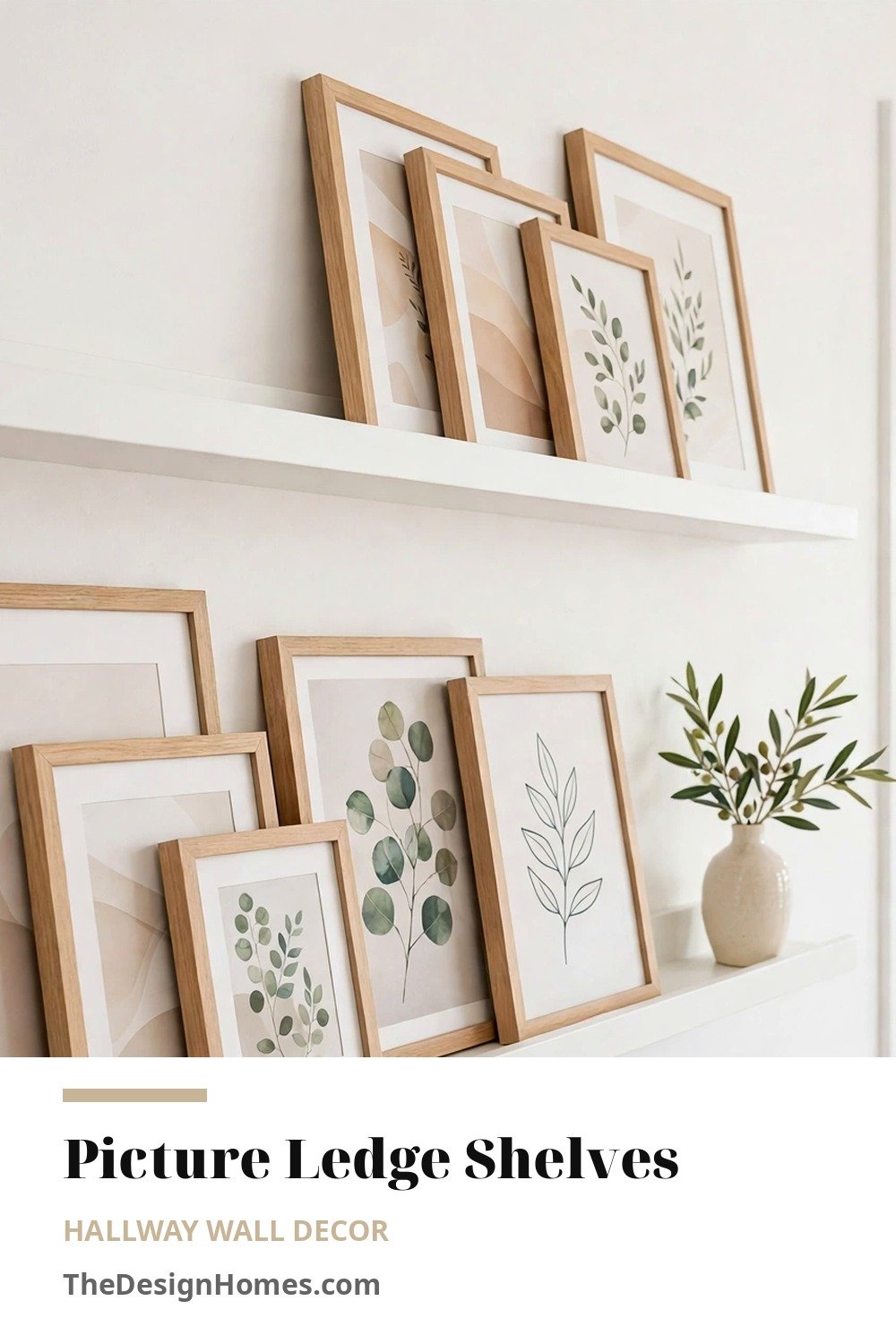
Picture ledges are slim shelves with a small lip that let you lean framed art against the wall instead of hanging it. That makes them perfect for hallways, because you can swap pictures, layer frames in front of each other, and adjust the arrangement without new nail holes every time. A single long ledge can hold a whole row of prints, while two stacked ledges create a layered gallery that feels relaxed and modern.
Lean larger frames at the back and smaller ones in front, overlapping them slightly for depth. Mix art prints with a few small objects, such as a tiny vase, to keep the display from feeling flat. Picture ledges work well above a console table, where they add height without crowding the furniture below.
6. Use Wainscoting for Classic Charm
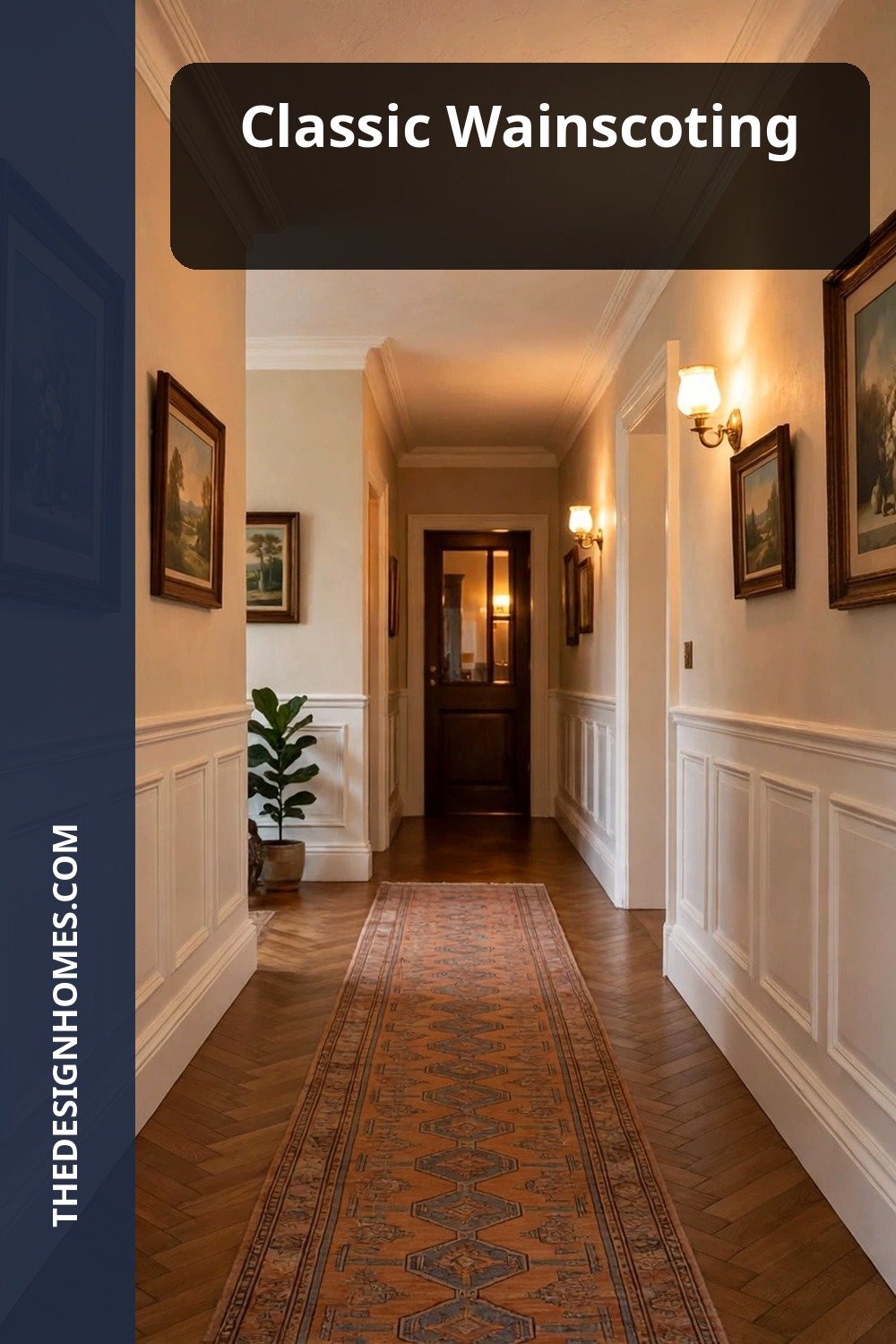
Wainscoting adds instant character to a hallway and protects the lower walls from scuffs at the same time. Traditional panelled wainscoting suits period homes, while simple board and batten strips give a clean, modern farmhouse feel. Painted the same colour as the wall, it adds subtle texture; painted in a contrasting shade, it becomes a real feature. Either way, it turns a flat, boring wall into something with depth and craft.
You can buy ready-made panels or create the look with slim timber strips and a chair rail, a manageable weekend project. Keep the panels to about a third of the wall height so the hallway still feels tall. Hang artwork or a mirror above the wainscoting to complete the look.
7. Hang Woven Baskets as Art
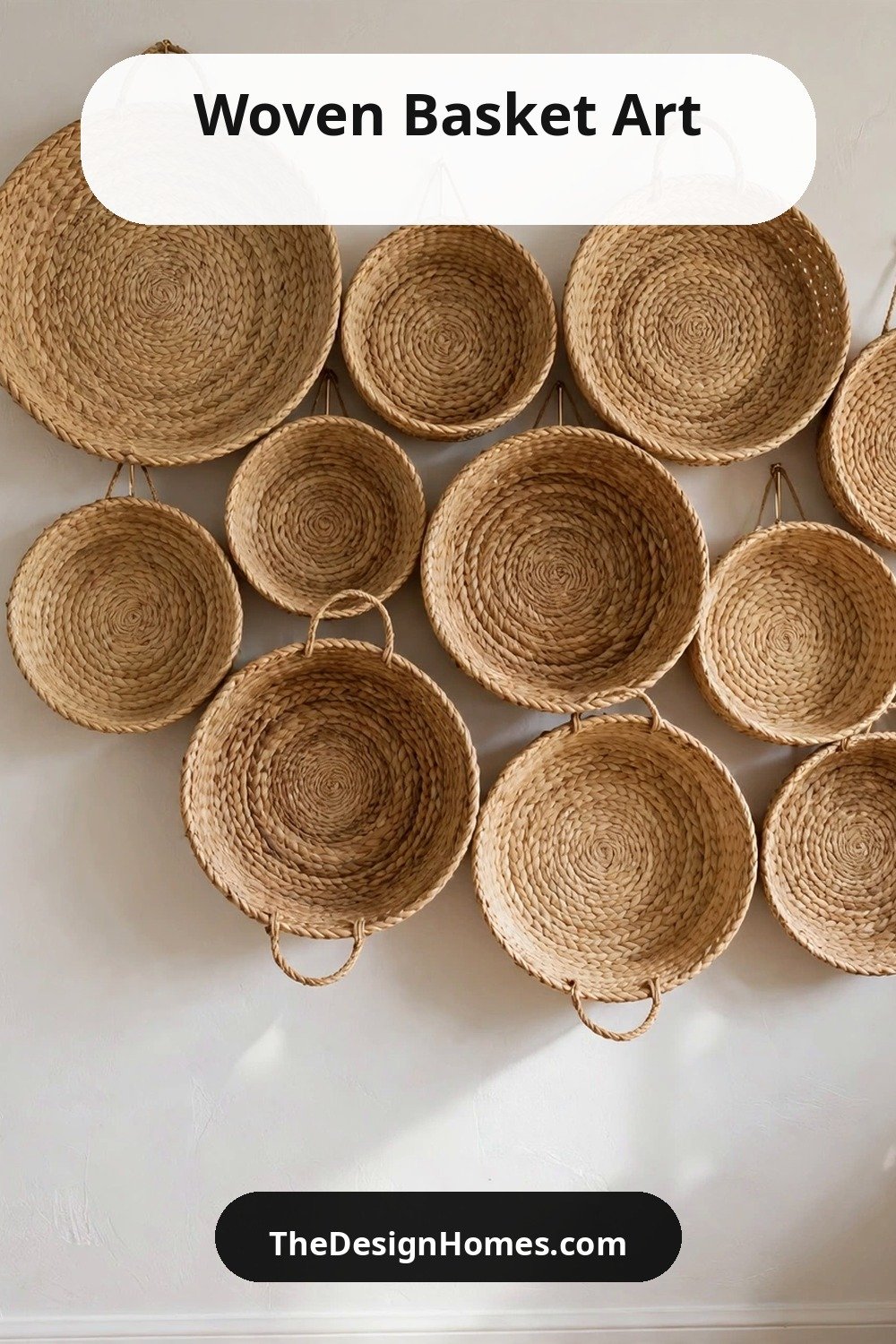
Woven baskets make beautiful, affordable wall art with a warm, handmade feel. A cluster of flat baskets in different sizes and patterns creates a textured display that suits boho, farmhouse, and global-inspired homes. They add natural tones and soft shapes to a hallway that might otherwise be all hard lines and flat paint. Because they are light, they are easy to hang with a single small nail each.
Arrange the baskets on the floor first, starting with the largest in the centre and building outward. Vary the colours and weaves, but keep a common thread, such as all natural fibres, so the group feels intentional. A basket display works well on a short wall or above a bench, and it brings warmth to the hallway in minutes.
8. Display a Collection of Vintage Frames
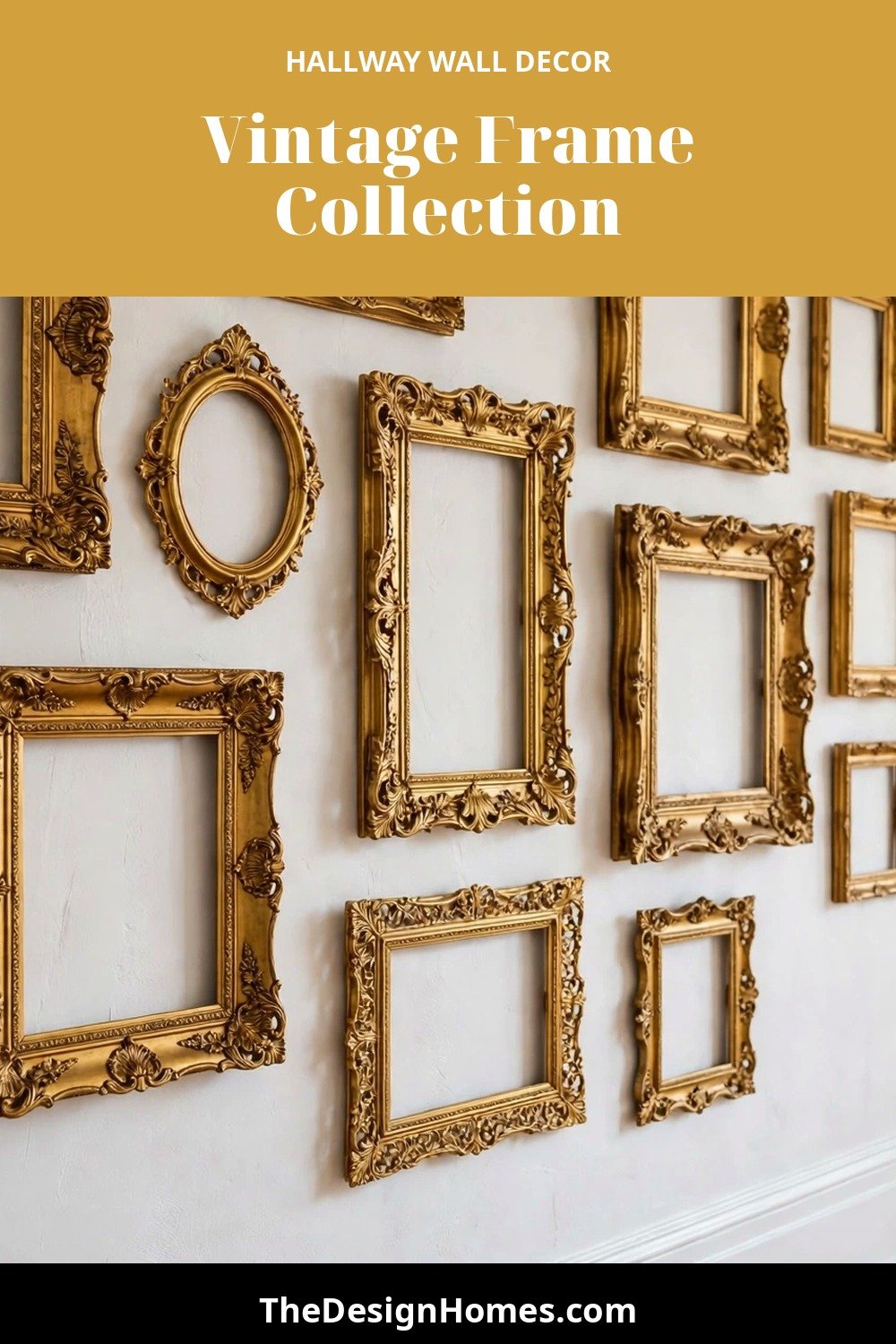
Empty vintage frames can be wall art all on their own. A collection of ornate gold, carved wood, or painted frames hung without pictures creates a charming, slightly whimsical display that suits traditional and eclectic homes alike. The frames add texture and history to the wall, and their varied shapes catch the light in interesting ways. You can find them cheaply at charity shops, flea markets, and car boot sales.
Mix sizes and styles but keep a unifying element, such as all gold tones, so the collection feels curated rather than random. Hang them in a loose cluster or a neat row, depending on your hallway’s shape. Vintage frames are a lovely way to give a hallway character on a small budget.
9. Style a Console Table Vignette Against the Wall
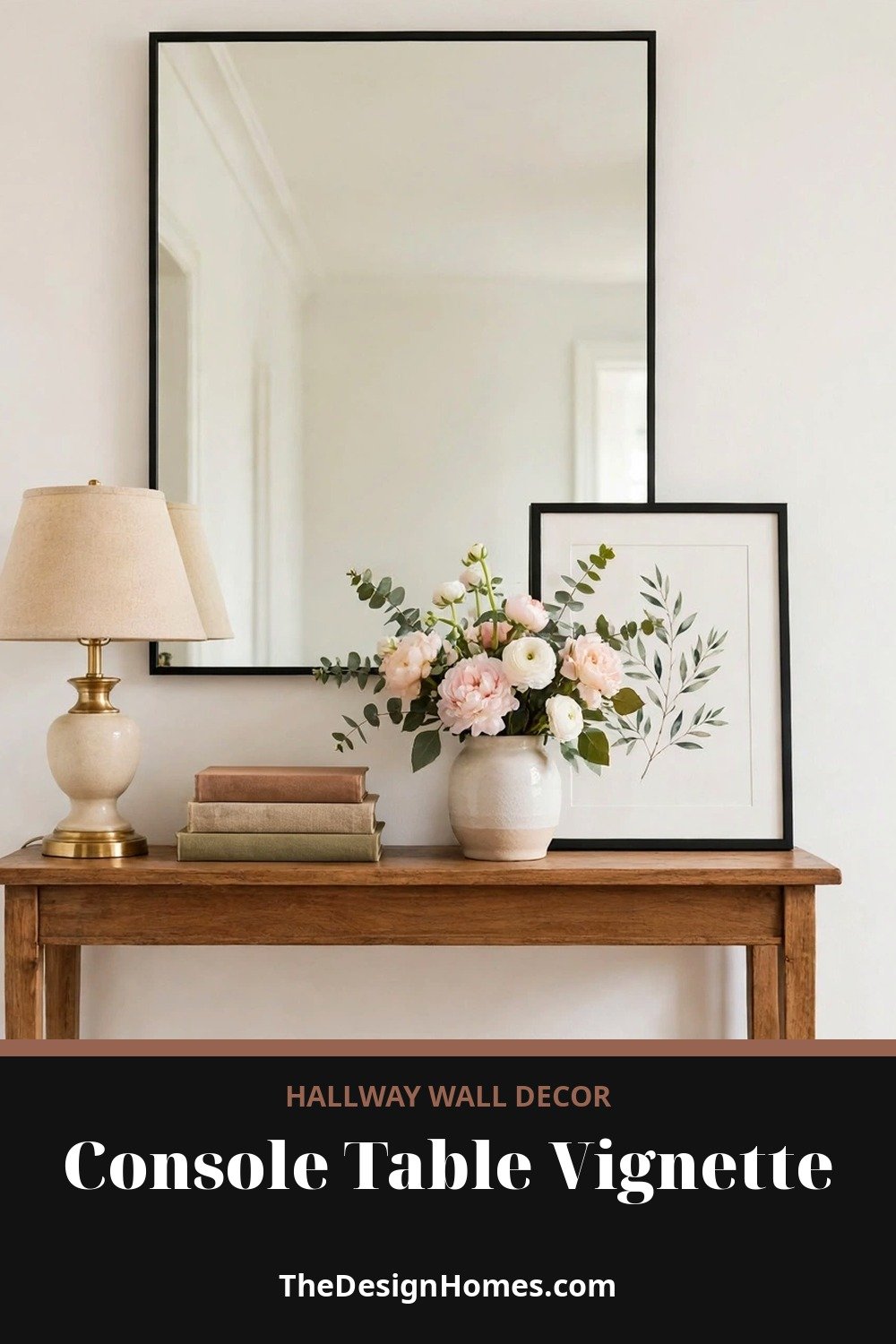
A narrow console table against the hallway wall creates a natural stage for decor. Style it with a lamp, a stack of books, a vase of fresh flowers, and a framed print leaning behind them. The table itself anchors the wall, and the objects on it add layers of height, colour, and texture. A mirror or piece of art hung above the table completes the vignette and ties the whole wall together.
Keep the tabletop uncluttered, with just three or four objects, so the hallway still feels easy to walk through. Choose a table slim enough to leave a comfortable walkway, usually no deeper than twelve inches. A basket underneath hides shoes and everyday clutter.
10. Hang Macramé and Textile Art
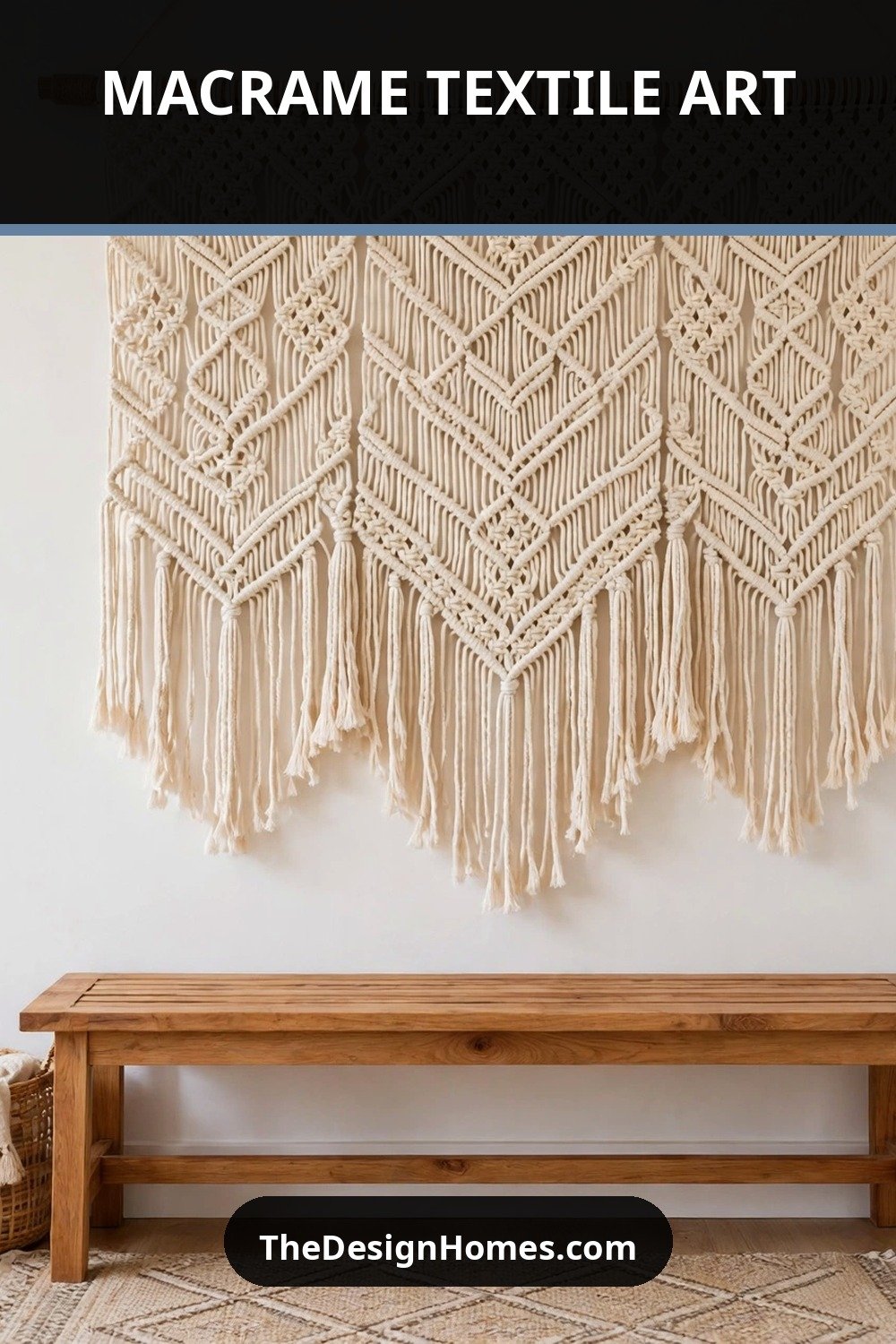
Macramé wall hangings and woven textile art bring softness and texture to hallway walls. Their natural fibres and gentle fringe contrast beautifully with hard plaster and wood floors, and they suit boho, Scandinavian, and relaxed modern homes. A large macramé piece can fill a blank wall on its own, while smaller woven hangings work well in a group or above a console table. They are light, easy to hang, and add a handmade, personal touch.
Choose a piece in natural cream or warm earth tones for a calm look, or pick one with a touch of colour to echo your hallway rug. Hang textile art at eye level and give it space, since its texture needs room to be appreciated. Textile art is a gentle way to make a hallway feel warm and welcoming.
11. Use Wall Sconces for Warm Light
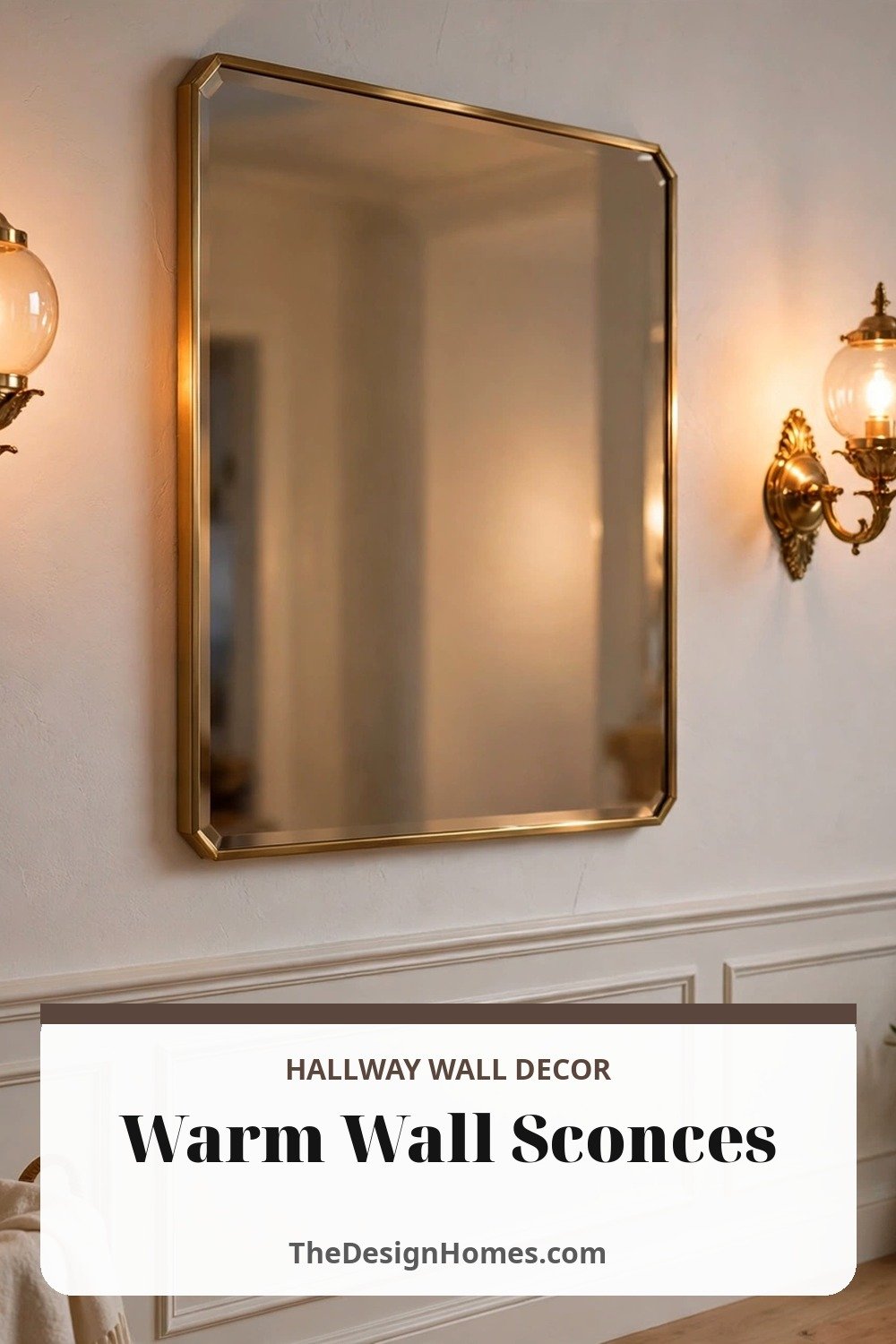
Wall sconces add both light and decoration to a hallway, which is often the darkest part of the house. A pair of sconces flanking a mirror or artwork creates a warm, inviting glow and makes the wall feel designed rather than empty. Choose sconces that match your style, from sleek modern brass to classic lantern shapes or rustic wood. Battery-operated sconces are a great option if you cannot wire new lights into the wall.
Space sconces evenly along a long hallway, about six to eight feet apart, and hang them at eye level so the light spreads softly. Warm-toned bulbs make the hallway feel cosy, while dimmable options let you adjust the mood in the evening.
12. Create a Chalkboard or Memo Wall

A chalkboard or memo wall turns a hallway into a useful family hub as well as a decorative feature. Paint a section of wall with chalkboard paint, or hang a large framed chalkboard, and use it for shopping lists, reminders, and cheerful messages. A cork board or magnetic board works the same way for pinning tickets, photos, and children’s artwork. It gives the hallway a lived-in, personal feel that changes week by week.
Keep the board tidy by wiping it clean regularly and limiting what gets pinned to a few favourite items. Frame the chalkboard so it looks intentional rather than improvised. A memo wall works especially well near the front door, where everyone passes it on the way in and out.
13. Add Botanical Prints and Greenery

Botanical prints bring a fresh, calming feel to a hallway, and they work in almost any style of home. A set of matching leaf or flower prints in simple frames adds colour without overwhelming a narrow space. Pair the prints with a real plant on a console table or a hanging planter on the wall, and the hallway suddenly feels alive. Greenery softens hard edges and adds a touch of nature to a space that rarely gets any.
Choose prints in colours that echo your hallway rug or front door for a cohesive look. Low-maintenance plants such as pothos or snake plants thrive in hallway light and need very little care. A wall-mounted planter keeps the floor clear and adds greenery at eye level where it can be enjoyed. Botanical decor is a simple, affordable way to make a hallway feel fresh and welcoming all year round.
14. Hang a Tapestry or Fabric Panel

A tapestry or fabric wall panel adds colour, pattern, and softness to a hallway in one easy step. A large tapestry can cover a whole blank wall and become the focal point of the space, while a smaller fabric panel works well above a bench or console table. Tapestries suit boho and eclectic homes, but a simple linen panel in a solid colour can work in a modern hallway too. They are light, easy to hang from a rod or a few small hooks, and easy to swap when you fancy a change.
Choose a design that picks up colours from nearby rooms so the hallway feels connected to the rest of the home. Hang the tapestry so its bottom edge sits above the console table or bench, keeping it clear of passing bags and coats. A fabric panel also helps soften echoes in a long hallway with hard floors. It is a quick, renter-friendly way to add drama and warmth to bare walls.
15. Finish With Seasonal Wreaths and Swaps

Seasonal decor keeps a hallway feeling fresh all year without a permanent commitment. A simple wreath on the wall, a framed print swapped for a seasonal one, or a small garland along a picture ledge can mark the change of seasons. A spring wreath of fresh greenery, a summer print in bright colours, an autumn wreath of dried leaves, and a festive winter wreath each give the hallway a new mood. These small swaps take minutes but make the whole entrance feel cared for.
Keep a small box of seasonal hallway pieces, such as wreaths, prints, and candle holders, so swapping them is easy. Choose one focal spot, like the wall above the console table, for seasonal changes and leave the rest of the decor the same. That way the hallway always feels familiar but never stale. Seasonal touches are the finishing detail that makes a hallway feel loved and lived in throughout the year.
Conclusion
Hallway walls deserve the same care as any other room in the house. A gallery wall, a statement mirror, or a few floating shelves can turn a forgotten corridor into a welcoming space that sets the tone for your whole home. The best hallway decor works with the shape of your space, adds light and texture, and reflects the people who live there. Start with one idea that solves your hallway’s biggest problem, whether that is darkness, blank walls, or a lack of personality, and build from there. With a few thoughtful pieces and the occasional seasonal swap, your hallway can become one of the most charming spots in your home.
Frequently Asked Questions
How do I decorate a narrow hallway without making it feel crowded?
Keep decor flat against the wall and use light colours. Mirrors, framed prints, picture ledges, and slim floating shelves add interest without taking up floor space. Avoid bulky furniture and deep shelves, and leave plenty of blank wall between pieces so the hallway still feels open and easy to walk through.
What is the best height to hang hallway wall decor?
Hang the centre of artwork and mirrors at eye level, about 57 to 60 inches from the floor. In a hallway, that usually means the centre of a gallery wall or a single large piece sits at that height. Above a console table, hang art six to eight inches above the tabletop so the two pieces feel connected.
Can I mix different styles of wall decor in one hallway?
Yes, mixing styles works well if you keep one unifying element, such as matching frames, a consistent colour palette, or a shared material like wood or brass. A gallery wall, a mirror, and a textile piece can sit happily together when they share a colour or finish. Avoid mixing too many competing colours or frame styles at once.
How do I decorate a hallway with no natural light?
Use mirrors to bounce light from nearby rooms, add wall sconces with warm bulbs, and choose light-coloured art and frames. A pale accent wall or white wainscoting also helps brighten the space. Avoid very dark colours on all four walls, and keep the decor light and reflective rather than heavy and matte.
How often should I change hallway wall decor?
Keep your main pieces, such as mirrors and gallery walls, in place and refresh smaller elements with the seasons. Swap a print, change a wreath, or restyle a floating shelf four times a year. This keeps the hallway feeling fresh without the cost or effort of redecorating from scratch.