
A small bedroom does not have to feel cramped or boring. In fact, some of the most charming bedrooms are the smallest ones, because every choice matters and every corner earns its place. With clever storage, the right colours, and furniture that works twice as hard, a tiny room can feel calm, cosy, and completely yours.
The secret to decorating a small bedroom is thinking vertically, choosing pieces that do more than one job, and keeping the visual clutter low so the room can breathe. This guide shares fifteen practical ideas that actually work in real small bedrooms, from space-saving storage to lighting tricks that make the whole room feel bigger.
1. Choose a Bed Frame with Built-In Storage

The bed takes up the most floor space in any bedroom, so making it work harder is the single smartest move in a small room. A bed frame with built-in drawers underneath gives you a whole dresser’s worth of storage without taking up a single extra inch of floor. Use the drawers for out-of-season clothes, spare bedding, or shoes.
If drawers do not suit your style, a lift-up ottoman bed is another excellent option, hiding a huge storage compartment under the mattress. Look for a frame with a slim profile and a headboard that is not too tall, so the bed does not dominate the room visually. A light-coloured frame also helps the bed feel less bulky in a tight space.
2. Use Vertical Storage to Free Up Floor Space
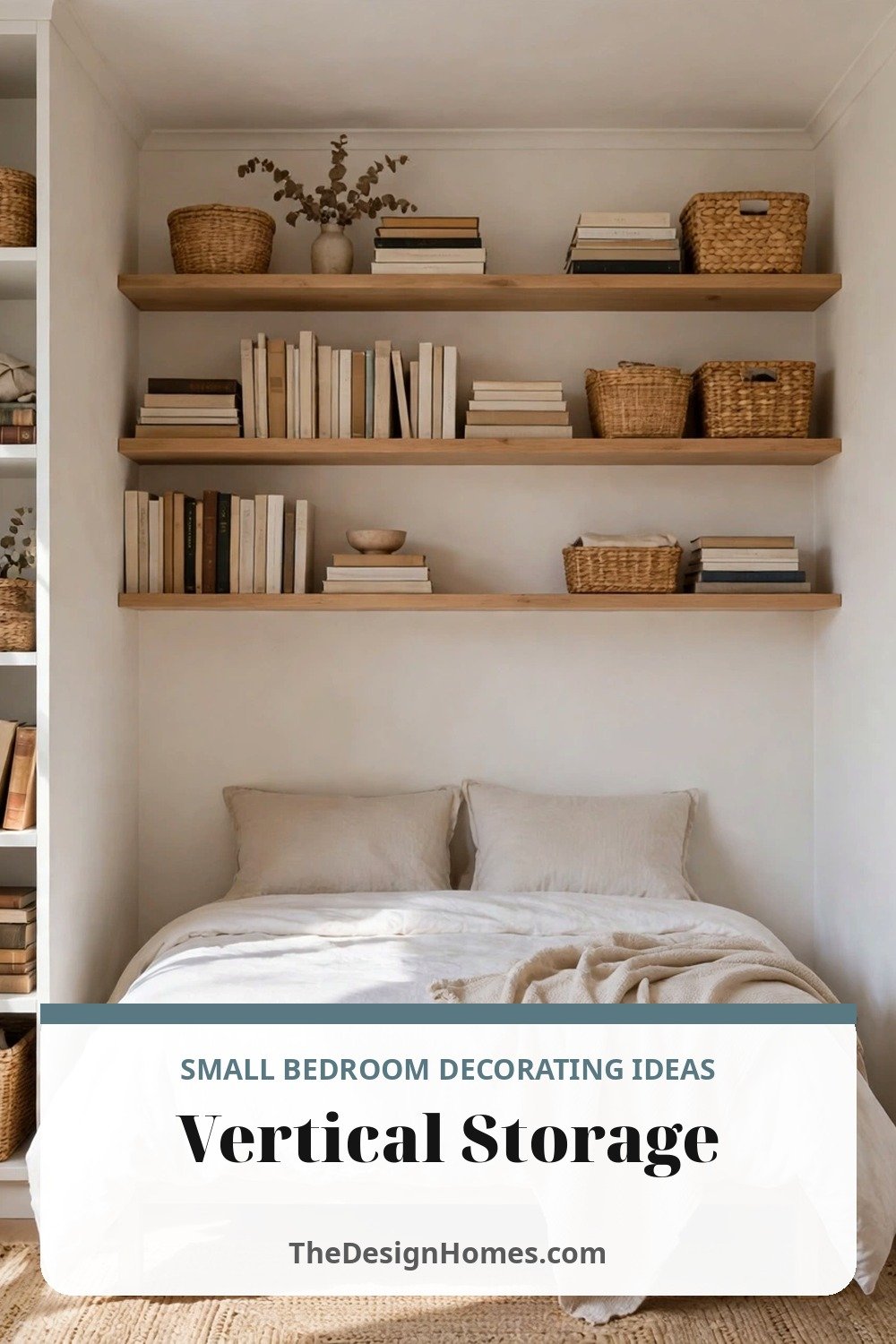
When floor space is limited, the walls are your best friend. Tall, narrow shelving units, floating shelves, and wall-mounted cabinets use the space above eye level that usually goes to waste. Install a shelf above the door, run a picture ledge along one wall, or add a tall bookcase in an awkward corner.
The trick is to keep vertical storage tidy and intentional. Use matching baskets or boxes on the higher shelves for things you do not reach for daily, and keep the shelves at eye level styled with a few favourite objects and books. A room that stores upward feels instantly more spacious because the floor stays clear and open.
3. Paint the Walls a Light, Airy Colour

Colour has a huge effect on how big a room feels, and pale shades are the easiest win in a small bedroom. Soft white, pale grey, light sage, or a gentle blush reflects natural light around the room and makes the walls feel further away than they really are. A single light colour on all four walls creates a calm, seamless envelope.
That does not mean the room has to be boring. Layer in texture with linen bedding, a woven throw, and a soft rug, and add colour through cushions and artwork that can be swapped easily. If you love a dark colour, try it on just one accent wall behind the bed, and keep the other three walls light to hold the balance.
4. Hang a Large Mirror to Double the Light
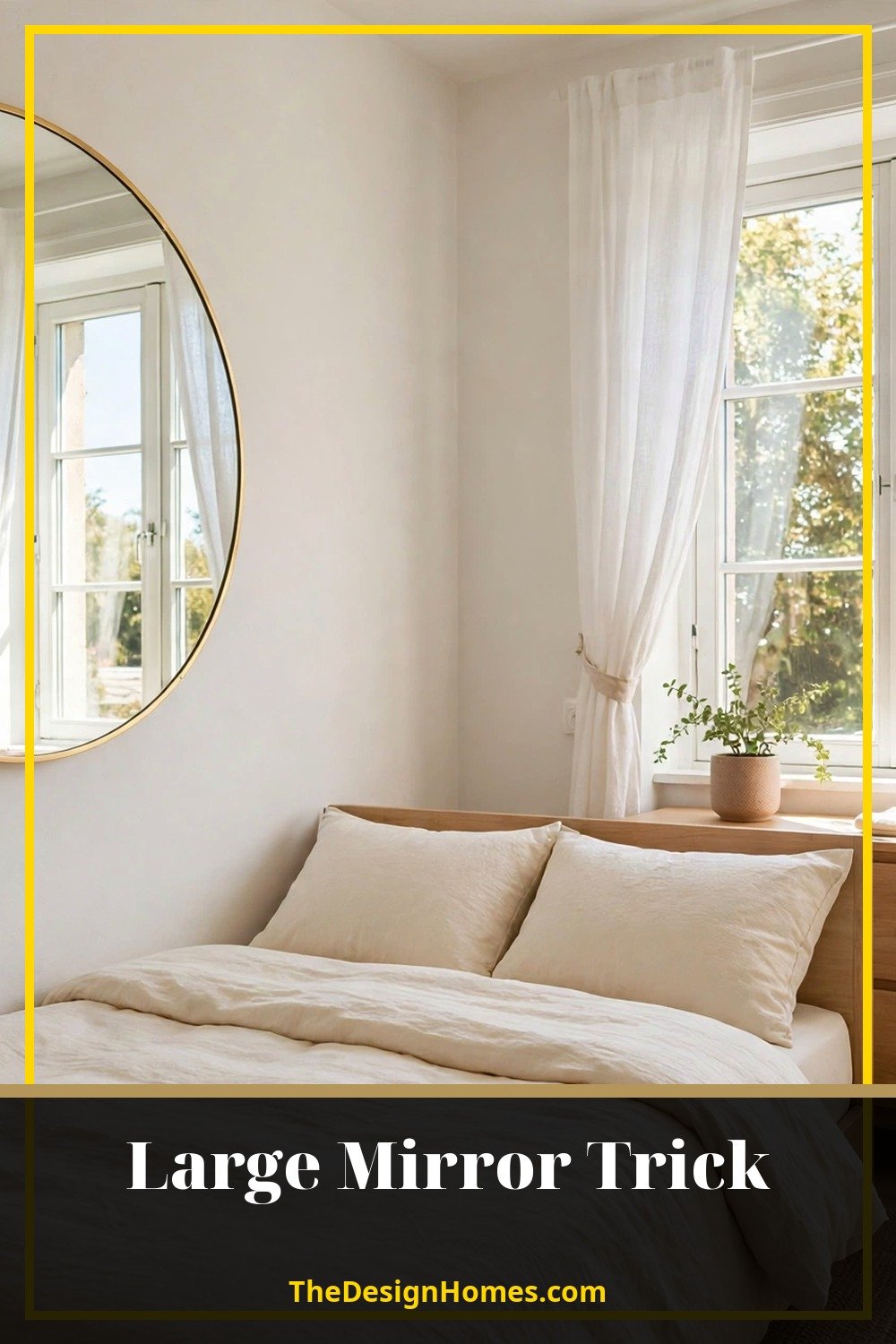
A large mirror is the oldest trick in the small-room playbook, and it works because it genuinely changes how the space reads. Placed opposite a window, a mirror bounces daylight deep into the room, making it feel brighter and noticeably bigger. A full-length mirror leaning against the wall doubles as a dressing mirror too.
Choose a mirror with a slim frame or no frame at all so it blends into the wall rather than becoming a heavy object. A round mirror above the bed or dresser softens the straight lines of a boxy room, while a tall rectangular one makes low ceilings feel higher. Keep the glass clean and the reflection tidy, since a mirror reflects clutter just as faithfully as it reflects light.
5. Pick Multi-Functional Furniture Pieces
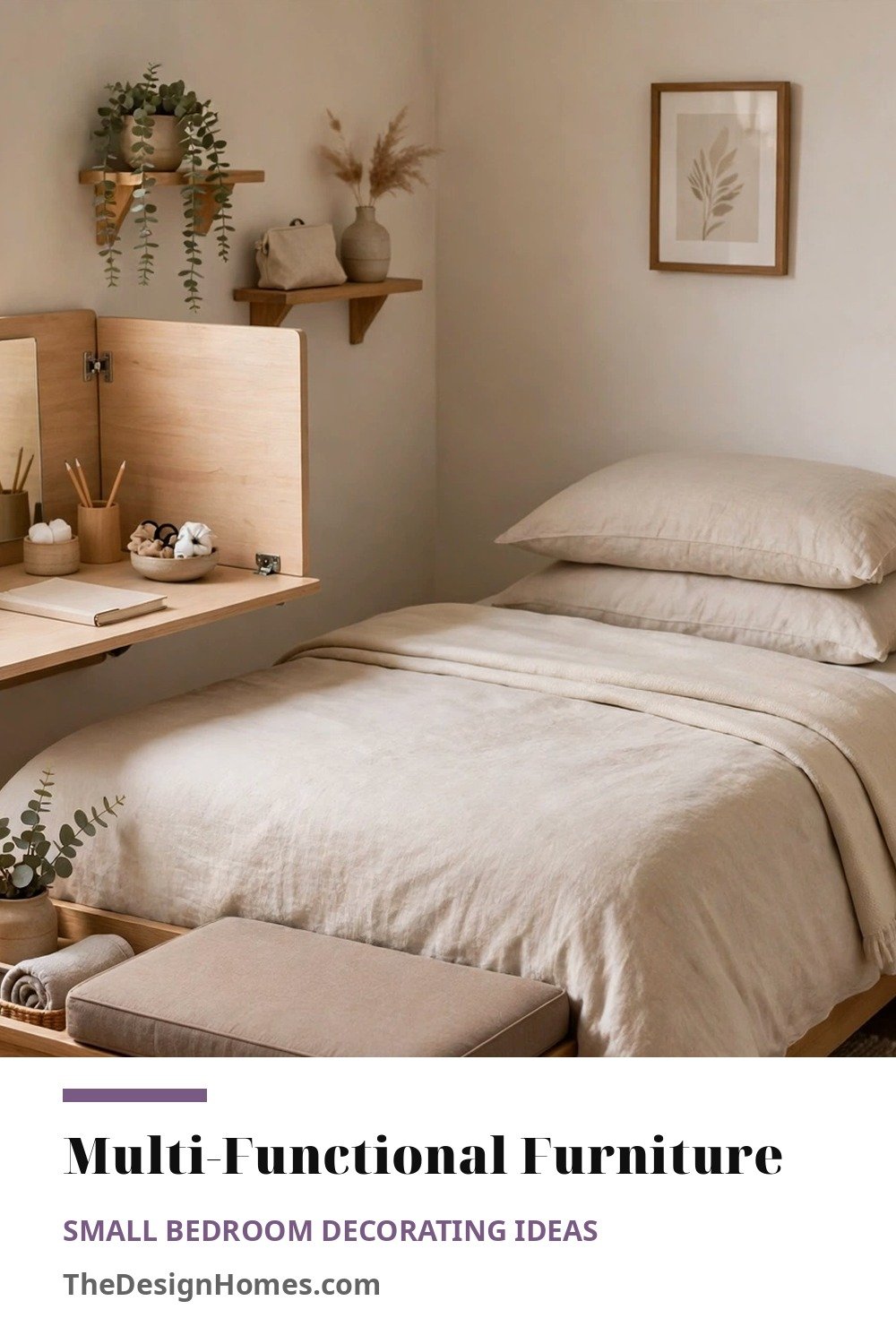
In a small bedroom, every piece of furniture should earn its keep by doing at least two jobs. A nightstand with drawers holds books and chargers, a bench at the foot of the bed stores blankets and gives you somewhere to sit, and a desk that folds away from the wall works as a vanity and a workspace in one.
Look for pieces that can move or adapt as your needs change. A small ottoman with hidden storage, a tray table that tucks beside the bed, or a wardrobe with a built-in mirror all save space and money. Before buying anything new, ask whether it replaces two things you already own, because fewer, harder-working pieces always beat a room full of single-purpose furniture.
6. Keep Bedding Simple and Coordinated
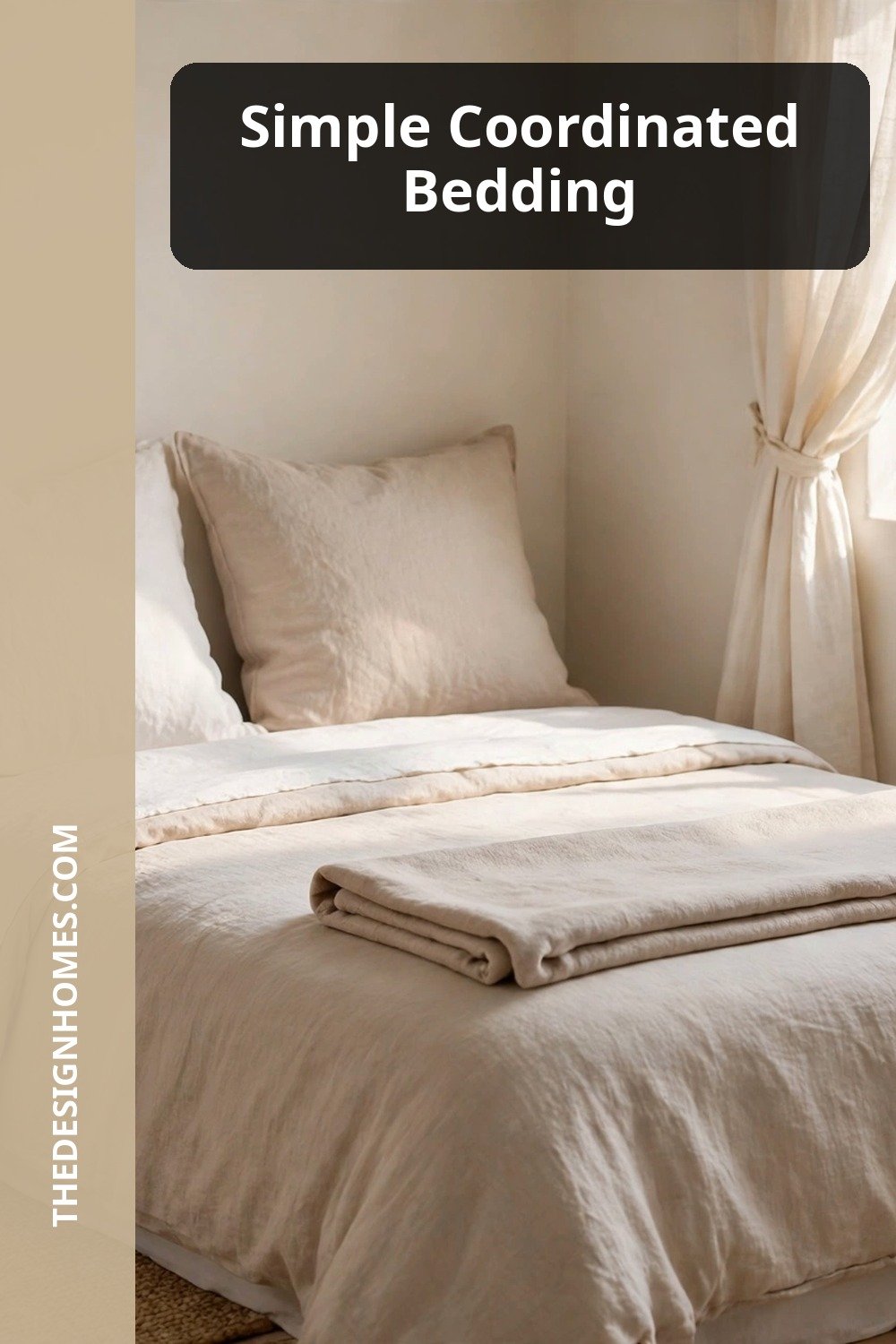
Busy patterns and clashing colours make a small bed look even bigger and the room feel more crowded. A simple, coordinated bedding set in one calm palette instantly makes the bed look neat and the whole room feel more peaceful. White or cream bedding with one accent colour in the cushions is a classic that never fails.
Layering is still possible in a small room, just keep it restrained. A single folded throw across the foot of the bed and two pillows instead of five gives you the cosy layered look without the visual bulk. Washable, breathable fabrics like cotton and linen also keep the bed comfortable and easy to maintain, which matters when the bed is the centrepiece of the room.
7. Add Floating Nightstands to Save Space

Traditional nightstands eat up precious floor space beside the bed, but a floating shelf or wall-mounted drawer does the same job without touching the floor at all. Your phone, a book, and a glass of water all fit on a compact floating shelf, and the open space underneath makes the room feel lighter and easier to clean.
Floating nightstands work especially well when the bed is pushed against a wall or into a corner, where a full nightstand would never fit. Pair them with a wall-mounted reading light to free up even more surface, and choose a shelf depth of around twenty-five centimetres so it holds what you need without jutting into the room.
8. Use Under-Bed Storage Boxes Smartly
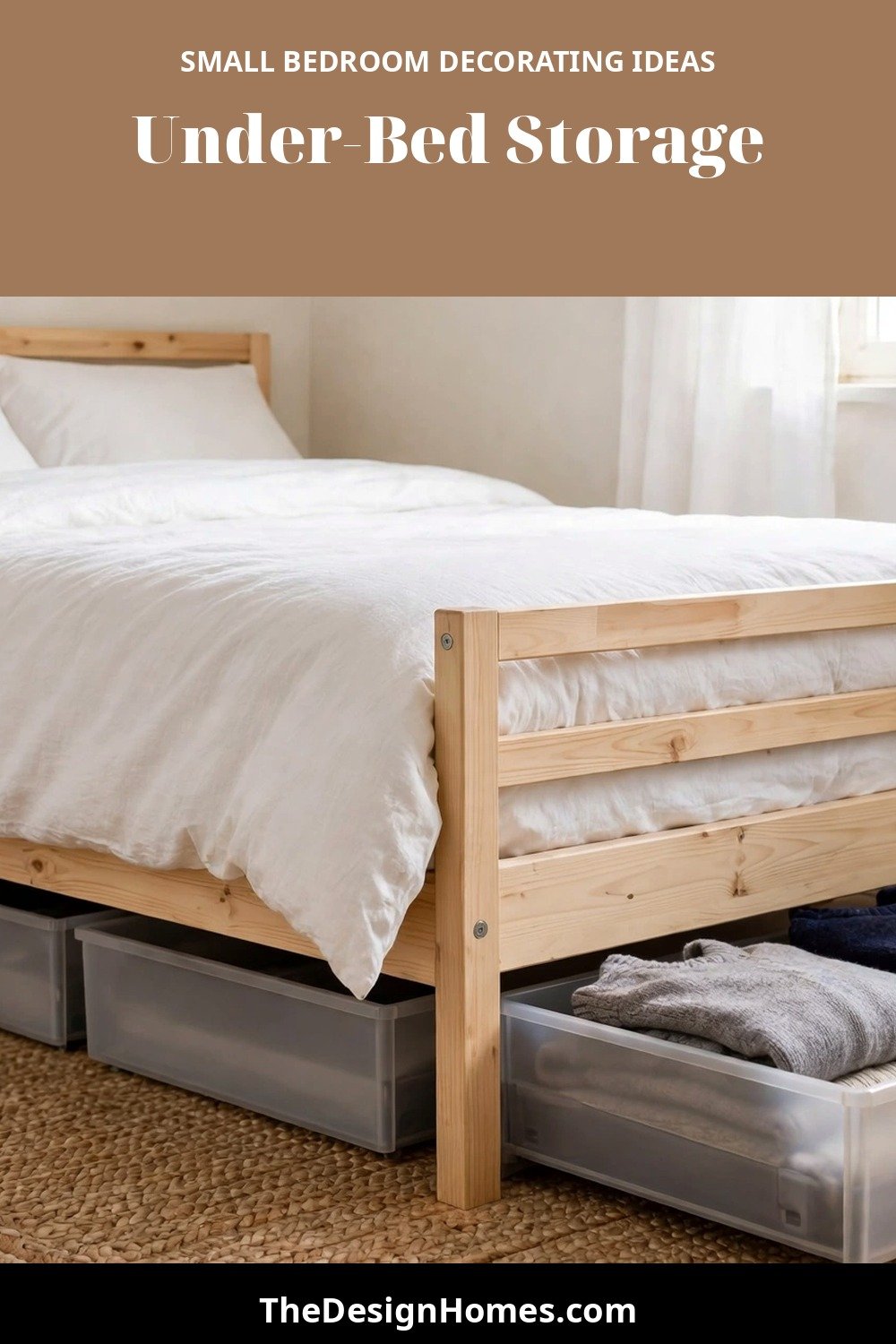
If your bed frame does not have built-in drawers, slim under-bed boxes are the next best thing. They slide neatly out of sight and hold a surprising amount, from winter jumpers to spare sheets and gift wrap. Choose low, flat boxes with lids and wheels so they glide out easily and keep dust away from your things.
Label each box so you can find things without pulling them all out, and reserve this space for items you use seasonally rather than daily. Vacuum-sealed bags inside the boxes can double the capacity for bulky bedding and coats. Just be sure to leave a small gap for airflow, and give the boxes a quick wipe every few months to keep everything fresh.
9. Layer Lighting for a Cosy Glow
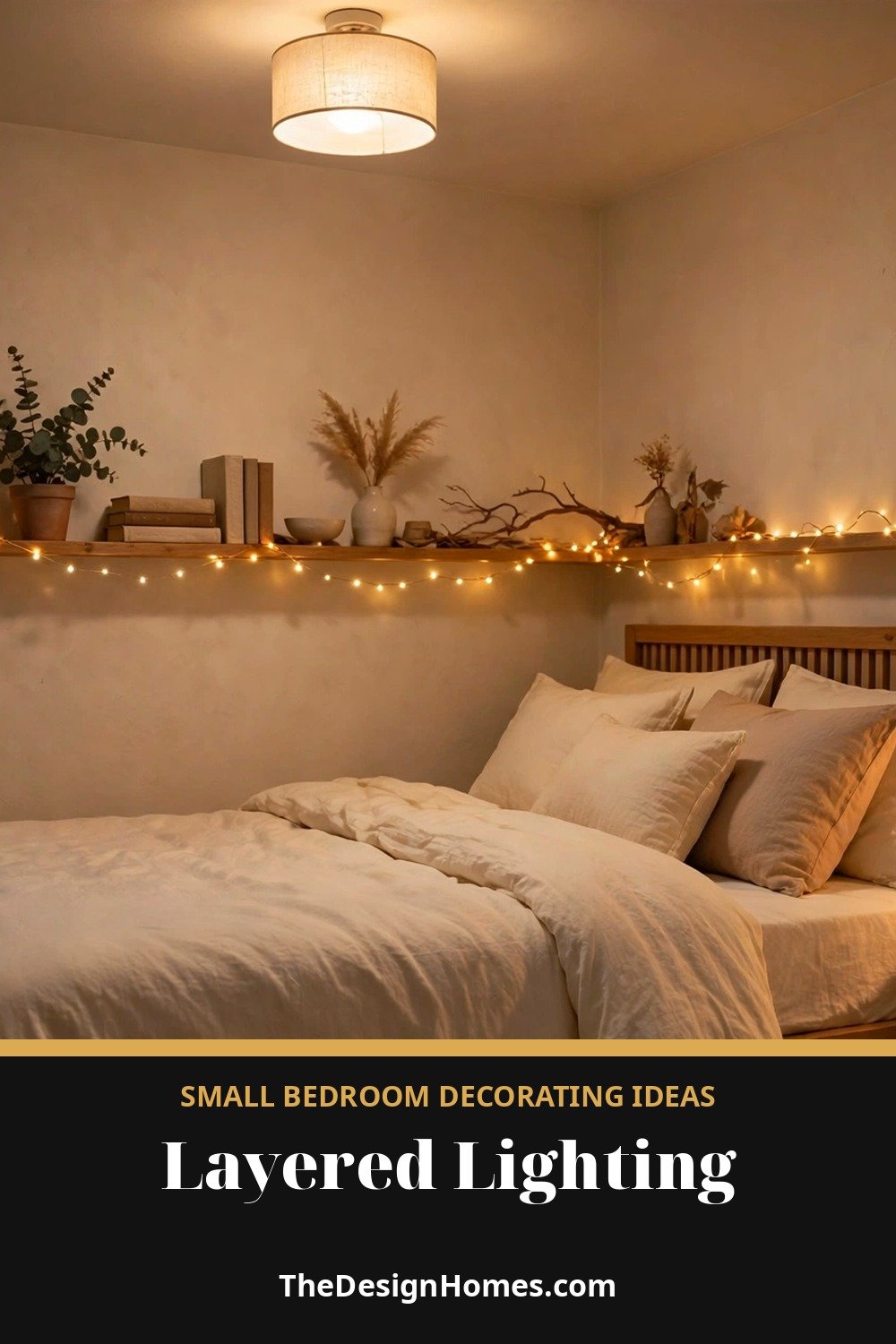
A single ceiling light makes a small bedroom feel flat and harsh, but layered lighting changes everything. Combine a soft overhead light with a bedside lamp or wall sconce and a warm string of fairy lights or a small candle-style lamp for evenings. Each layer can be switched on separately depending on the mood.
Warm-toned bulbs around 2700 Kelvin feel cosy and flattering, while a dimmer switch lets you lower the brightness at bedtime. Wall-mounted lights are a smart choice in a small room because they free up nightstand space, and a small lamp on a shelf adds a pool of warm light exactly where you read. Good lighting makes a small room feel like a retreat rather than a box.
10. Create a Feature Wall Behind the Bed

A feature wall gives a small bedroom a focal point and a sense of design without taking up any floor space. Paint the wall behind the bed in a soft accent colour, add removable wallpaper in a gentle pattern, or hang a large piece of art or a woven wall hanging that draws the eye upward.
Keep the rest of the room calm so the feature wall can shine. Matching the bedding to one colour pulled from the feature wall ties everything together beautifully. Removable wallpaper is ideal for renters, and a painted arch or a simple panelled effect can add character for very little cost. One strong focal point makes the whole room feel intentional and finished.
11. Declutter with a Capsule Wardrobe Approach

A small bedroom cannot hide clutter, so editing what you own is one of the most effective decorating moves there is. A capsule wardrobe, a small collection of versatile clothes you actually wear, means your wardrobe stays organised, your drawers close properly, and getting dressed in the morning becomes faster and easier.
Start by removing everything you have not worn in a year, then keep only pieces that fit well and work with at least three other items. Store out-of-season clothes in under-bed boxes or on a high shelf, and give every remaining item a proper home. The visual calm that follows is worth more than any new piece of furniture.
12. Choose Curtains That Hang High and Wide
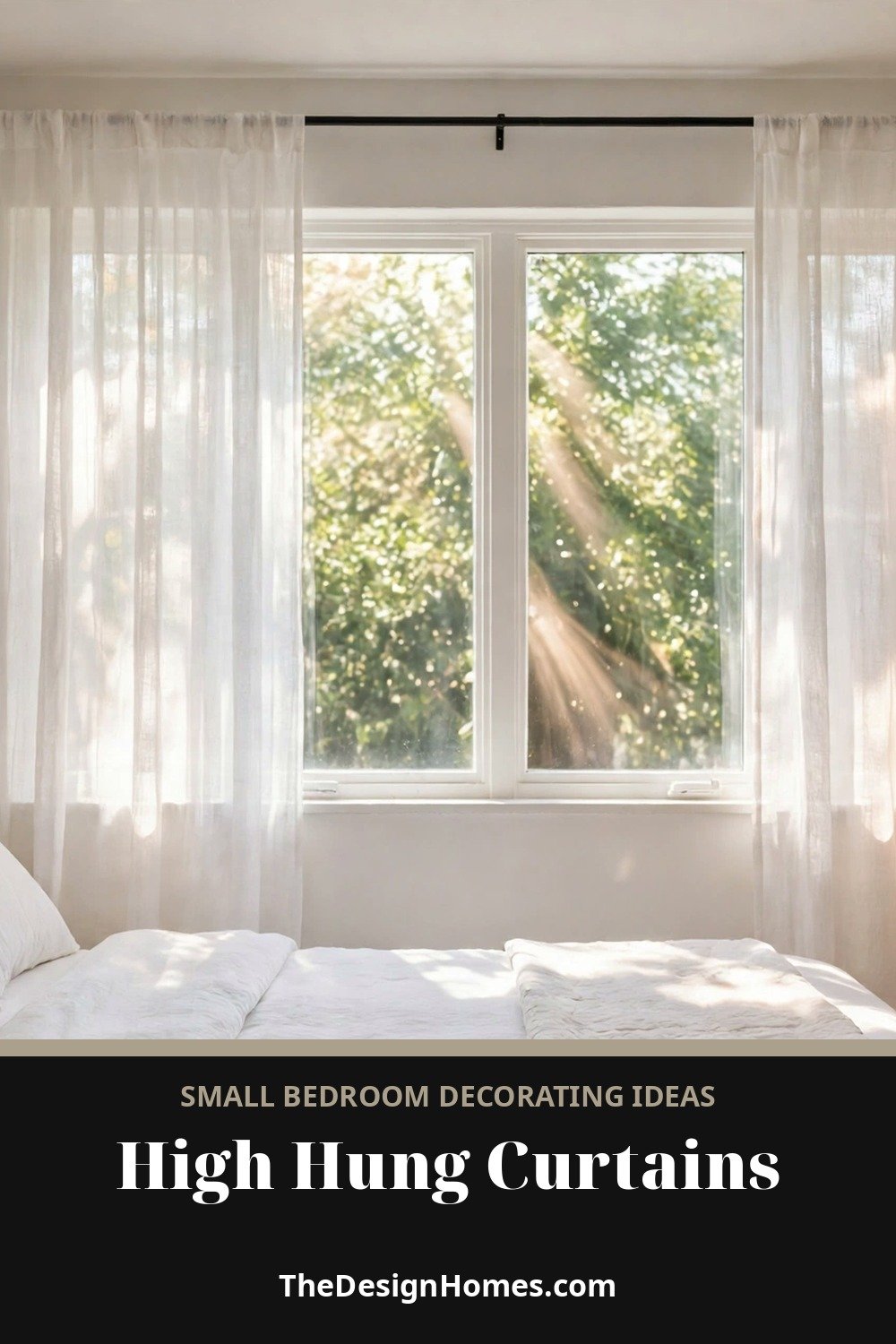
Curtains can make a small bedroom feel taller and wider if they are hung correctly. Mount the curtain rod close to the ceiling and extend it well beyond the window frame on both sides, so the curtains hang over the wall rather than covering the glass. This makes the window look much larger than it really is.
Light, sheer fabrics let daylight through while still giving privacy, and a simple linen curtain in a pale colour keeps the room feeling airy. Avoid heavy, dark drapes that swallow light and make the walls feel closer. When the curtains are open, they should frame the window like a picture rather than blocking it.
13. Add Plants for Life and Fresh Air

A few well-chosen plants bring a small bedroom to life, adding colour, texture, and a sense of calm. Trailing plants on a high shelf, a small potted plant on the nightstand, or a tall plant in an empty corner all work beautifully without taking up useful surface space. Plants also soften the hard edges of furniture and walls.
Choose low-maintenance varieties that thrive in bedrooms, such as snake plants, pothos, or peace lilies, which tolerate low light and help purify the air. Keep the number small, two or three plants is plenty in a tiny room, and use matching pots to keep the look cohesive. A little greenery makes the room feel fresh and lived-in rather than staged.
14. Use a Rug to Define the Sleeping Zone
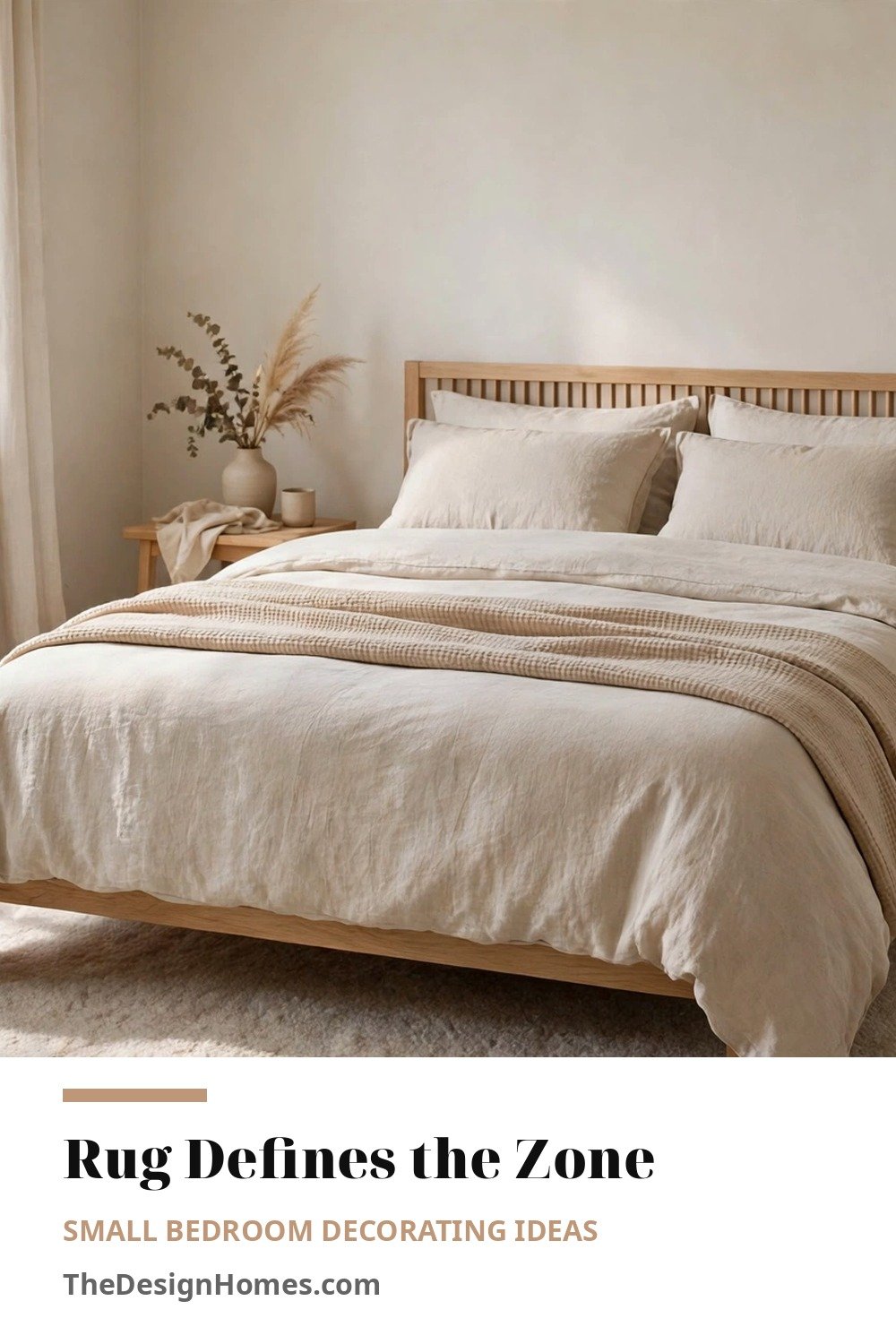
In a small bedroom, a rug does more than warm your feet, it defines the sleeping area and makes the room feel deliberately designed. A rug that extends just beyond the sides and foot of the bed anchors the furniture and creates a soft island in the middle of the room. Choose a size that leaves a border of floor visible around the edges so the room still feels open.
A low-pile rug in a pale or neutral tone works best in a small space, and a simple pattern can add interest without overwhelming the room. Layering a smaller textured rug over a larger plain one is another lovely trick for added warmth. A rug also softens sound, which makes a small bedroom feel quieter and more restful.
15. Keep Surfaces Clear with a Daily Reset
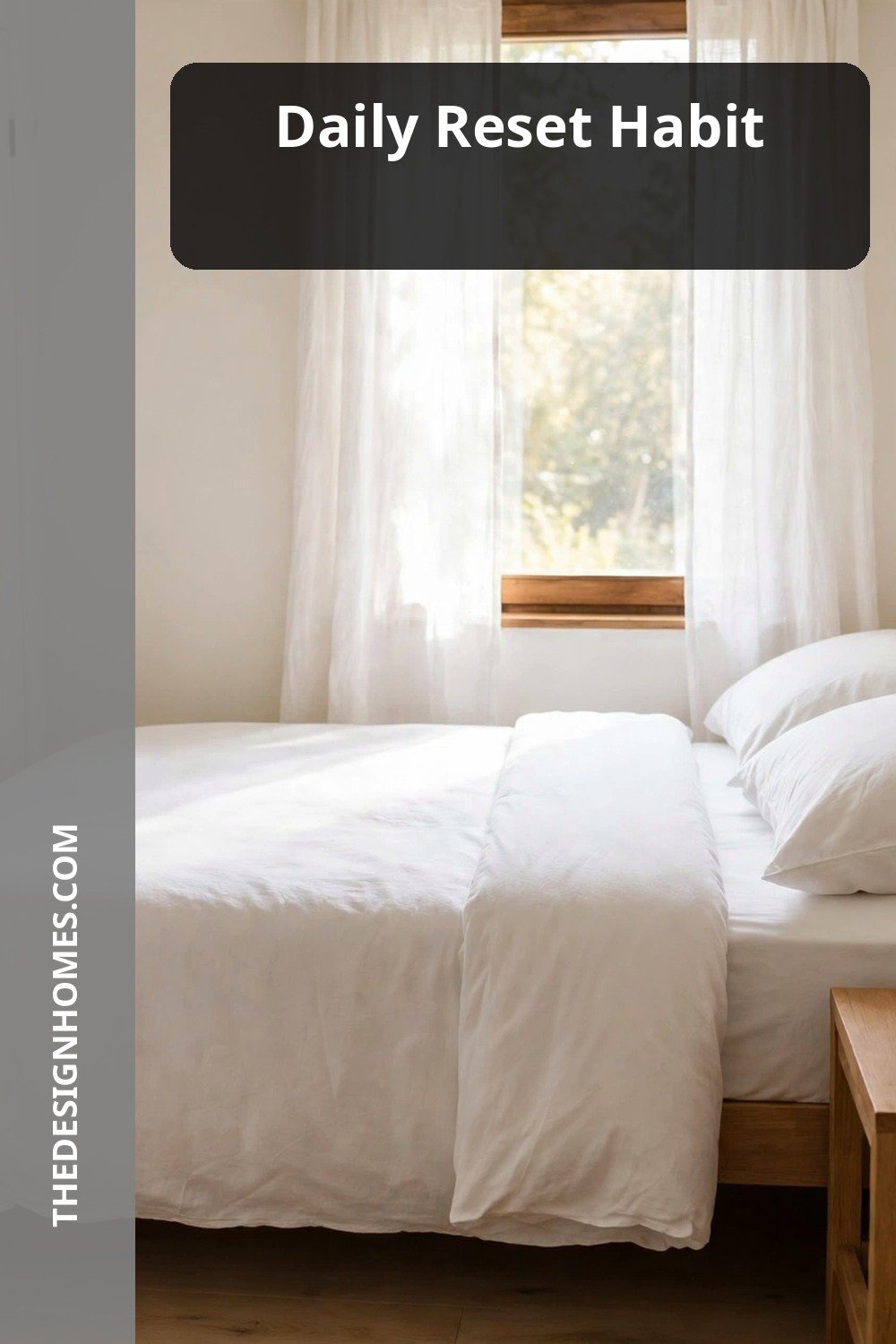
The final idea is a habit rather than a purchase, and it is the one that makes all the others work. A small bedroom only stays beautiful if surfaces stay clear, so build in a two-minute daily reset. Make the bed, clear the nightstand, hang up clothes instead of draping them on a chair, and put everything back where it belongs before bed.
Give every item a designated spot so tidying becomes automatic rather than a chore. A small tray on the dresser corrals jewellery and keys, a hook by the door holds tomorrow’s outfit, and a laundry basket with a lid hides the mess. When the room starts each day tidy, it feels bigger, calmer, and far more enjoyable to come home to.
Conclusion
Decorating a small bedroom is really about making smart choices rather than having a big budget. A storage bed, a mirror opposite the window, light colours, and furniture that does double duty can transform a cramped room into a calm, organised retreat. The ideas in this guide work because they focus on what actually matters in a small space: light, storage, and a sense of order.
Start with the changes that cost nothing, like decluttering and hanging your curtains higher, then add one or two bigger pieces as your budget allows. Your small bedroom does not need to be bigger to be beautiful, it just needs to be thoughtfully put together, and every small improvement makes a real difference.
Frequently Asked Questions
What colour makes a small bedroom look bigger?
Light, cool colours like soft white, pale grey, and light sage reflect the most light and make walls feel further away. Painting the ceiling the same light colour as the walls also removes the visual boundary and makes the room feel taller.
How can I add storage to a small bedroom without furniture?
Use the space you already have: under-bed boxes, hooks on the back of the door, a shelf above the door, and baskets on top of the wardrobe. Vacuum-sealed bags for out-of-season clothes can double the capacity of the storage you already own.
Should the bed go against the wall in a small bedroom?
Pushing the bed against a wall or into a corner frees up valuable floor space and can make a very small room feel much more open. It works best with a floating nightstand on the open side and a wall-mounted light so both sleepers can reach what they need.
What size rug works best in a small bedroom?
Choose a rug that extends about forty-five centimetres beyond each side and the foot of the bed, with a visible border of floor around it. A rug that is too small looks lost, while one that covers the whole floor makes the room feel smaller.
How do I make a small bedroom feel cosy rather than cramped?
Layer soft textures like linen bedding, a knitted throw, and a plush rug, use warm lighting at different heights, and keep clutter to a minimum. Cosiness comes from texture and warmth, not from filling the room, so choose a few rich details and leave plenty of breathing space around them.


