
A narrow hallway is often the most neglected space in a home, treated as little more than a passage between rooms. Yet it is the first thing guests see when they walk in, and with a few clever ideas it can become one of the most stylish and welcoming parts of your home. A narrow hallway does not need to feel like a tunnel; it needs smart choices that add light, colour, and personality without getting in the way.
The trick is to think vertically, keep the floor clear, and choose slim, multi-purpose pieces that earn their place. These twenty-five ideas will help you turn a tight hallway into a beautiful, functional space that sets the tone for the rest of your home, whatever its size or budget.
1. Paint It Light and Bright

Light paint is the easiest way to open up a narrow hallway, because pale walls reflect light and make the space feel wider than it is. Choose soft white, pale grey, or a gentle warm cream, and paint the ceiling the same colour so the walls and ceiling blend together. This simple trick removes the hard edges that make a hallway feel like a tunnel.
If you love colour, use it on the front door or on one short end wall, which draws the eye forward and makes the hallway feel longer rather than narrower. Avoid dark colours on the long side walls, since they close the space in. A fresh coat of light paint costs very little, yet it transforms a gloomy hallway in a single afternoon.
2. Add a Slim Console Table

A slim console table gives a narrow hallway a useful surface without blocking the walkway, as long as you choose one no deeper than twenty-five centimetres. Place it against the longest wall, and use it for keys, mail, and a small lamp or vase. The table anchors the hallway and makes it feel like a proper room rather than a corridor.
Style the top with restraint, keeping one or two beautiful objects and leaving space for daily essentials. A basket underneath holds shoes or bags, while a drawer hides clutter like dog leads and spare keys. Choose a table with slim legs so the floor shows beneath it, which keeps the hallway feeling open and airy.
3. Hang a Statement Mirror

A large mirror is the best friend of a narrow hallway, because it reflects light and creates the illusion of extra width. Hang a tall mirror on one long wall, ideally opposite a door or window, and the hallway will instantly feel brighter and more spacious. A mirror also gives you a last check before you leave the house, which makes it practical as well as pretty.
Choose a mirror with an interesting frame, such as arched, brass, or rattan, so it doubles as a piece of art. A full-length mirror works especially well in a hallway, since it adds height and drama without taking up floor space. Keep it clean and streak-free, because a smudged mirror dulls the light instead of bouncing it around.
4. Use a Runner Rug

A runner rug adds colour, warmth, and pattern to a narrow hallway, and it protects the floor from muddy shoes at the same time. Choose a runner that leaves a border of floor showing on each side, so the hallway still looks wide, and pick a pattern that draws the eye along the length of the space. A bold stripe or a vintage-style pattern can make a plain hallway feel designed.
Washable runners are the practical choice for a hallway, since they take the most foot traffic in the house. Layer a slim rug pad underneath to stop it slipping, and choose colours that echo the rooms the hallway connects. A good runner makes the hallway feel finished, and it softens footsteps so the whole home feels quieter.
5. Create a Gallery Wall
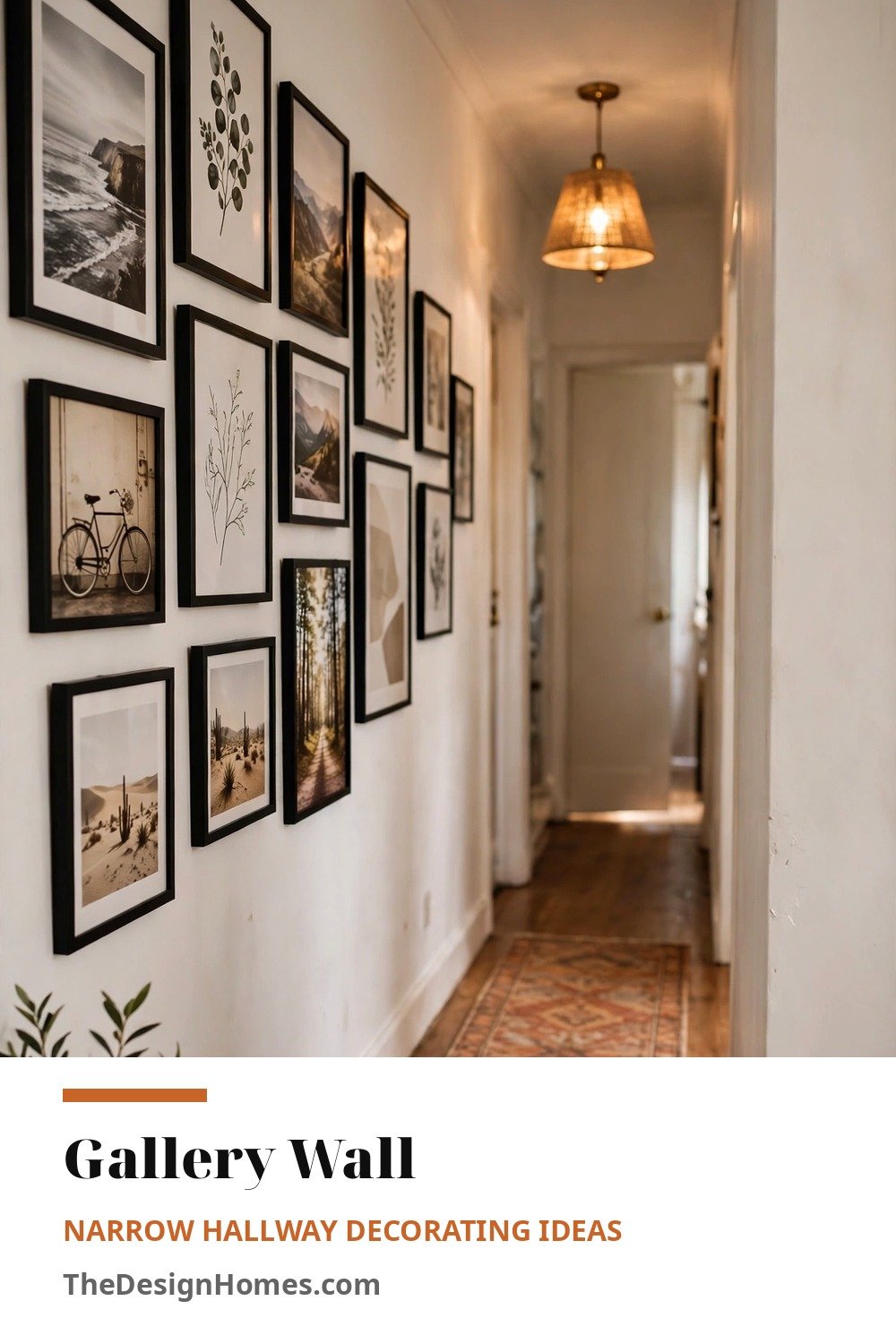
A gallery wall turns a blank hallway into a personal art gallery, and it works beautifully in a narrow space because it uses the walls rather than the floor. Hang a mix of framed photos, prints, and small artworks along one wall, keeping the frames at eye level so they are easy to enjoy. A consistent frame colour ties the collection together, even when the pictures are all different.
Plan the layout on the floor first, then hang the largest piece in the middle and build outward. Leave even gaps between frames, and include a mix of sizes for a collected look. A gallery wall tells your story to everyone who walks through, and it makes a plain hallway feel warm, personal, and full of life.
6. Add Wall Sconces

Wall sconces add warm, flattering light to a narrow hallway without taking up any floor or table space, which makes them ideal for tight corridors. Install a pair of sconces at eye level along the longest wall, and choose warm white bulbs for a golden glow that makes the hallway feel welcoming. Sconces also add a decorative touch, acting like jewellery on the wall.
If you cannot wire new lights, battery-operated sconces with a remote control are an easy alternative that look just as good. Choose a style that matches your home, from modern brass to classic black, and keep the shades simple so the light spreads evenly. Good hallway lighting makes the whole home feel safer and more inviting after dark.
7. Use Vertical Storage

In a narrow hallway, the only way to add storage is up, so think vertically with tall, slim units that use the height of the walls. A narrow coat rack, a row of hooks, or a tall shoe cabinet keeps everything off the floor while using barely any width. Wall-mounted shelves above head height hold hats, scarves, and seasonal items that you do not need every day.
Keep the storage slim and close to the wall, and choose pieces in a light colour so they blend in rather than dominating the space. A tall mirror-fronted cabinet doubles as storage and a mirror, which is perfect for a hallway. The goal is to keep the floor clear, because a clear floor is what makes a narrow hallway feel walkable and calm.
8. Add Hooks and Peg Rails

Hooks and peg rails are the simplest and most useful addition to a narrow hallway, giving coats, bags, and hats a home without any bulky furniture. Install a wooden peg rail at a comfortable height along one wall, and add a few individual hooks at different heights for children and adults. The rail keeps everyday items visible and easy to grab on the way out.
Choose hooks in a finish that matches your door handles or light fixtures, such as brass, black, or wood, so the hallway looks coordinated. Limit the rail to the coats you actually wear, and store out-of-season coats elsewhere, so the wall never looks overloaded. A tidy row of hooks feels intentional and stylish, while a pile of coats on the floor feels chaotic.
9. Choose Slim Furniture

Every piece of furniture in a narrow hallway must be slim, or it will block the walkway and make the space feel cramped. Look for pieces no deeper than twenty-five centimetres, such as a narrow bench, a slim shoe cabinet, or a wall-hung shelf. Furniture with legs is better than solid pieces, because seeing the floor underneath keeps the hallway feeling open.
A slim bench gives you a place to sit while putting on shoes, and a shoe cabinet underneath hides clutter. Avoid round tables or anything that sticks out into the walkway, and measure the space before buying anything. When furniture fits the hallway properly, the whole space feels designed rather than squeezed, and walking through it becomes effortless.
10. Add Greenery

A plant or two brings life and freshness into a narrow hallway, softening the hard lines of the walls and making the space feel welcoming. Choose a tall, slim plant like a snake plant or a fiddle leaf fig for a corner, or hang a trailing pothos from a high shelf where it will not block the walkway. Plants add colour and texture without taking up much room.
If your hallway has little natural light, choose a low-light plant or use a good-quality faux plant that looks realistic. A small vase of fresh or dried flowers on the console table adds a lovely touch, and a eucalyptus bunch hung on a hook adds scent as well as beauty. Greenery makes even the plainest hallway feel alive and cared for.
11. Define Zones with Colour

Colour can define the different zones of a hallway, making a long, narrow space feel structured rather than endless. Paint the entry area one soft shade, the middle stretch another, or use a bold colour on the front door and the skirting boards to frame the space. A painted arch or a colour-blocked section behind a console table creates a focal point that breaks up the tunnel effect.
Keep the main walls light and use colour as an accent, so the hallway still feels bright and open. A painted lower wall with a white upper wall, known as a dado effect, adds character and hides scuff marks from shoes and bags. Colour zoning is a cheap, paint-only trick that makes a hallway feel designed by a professional.
12. Add a Small Bench
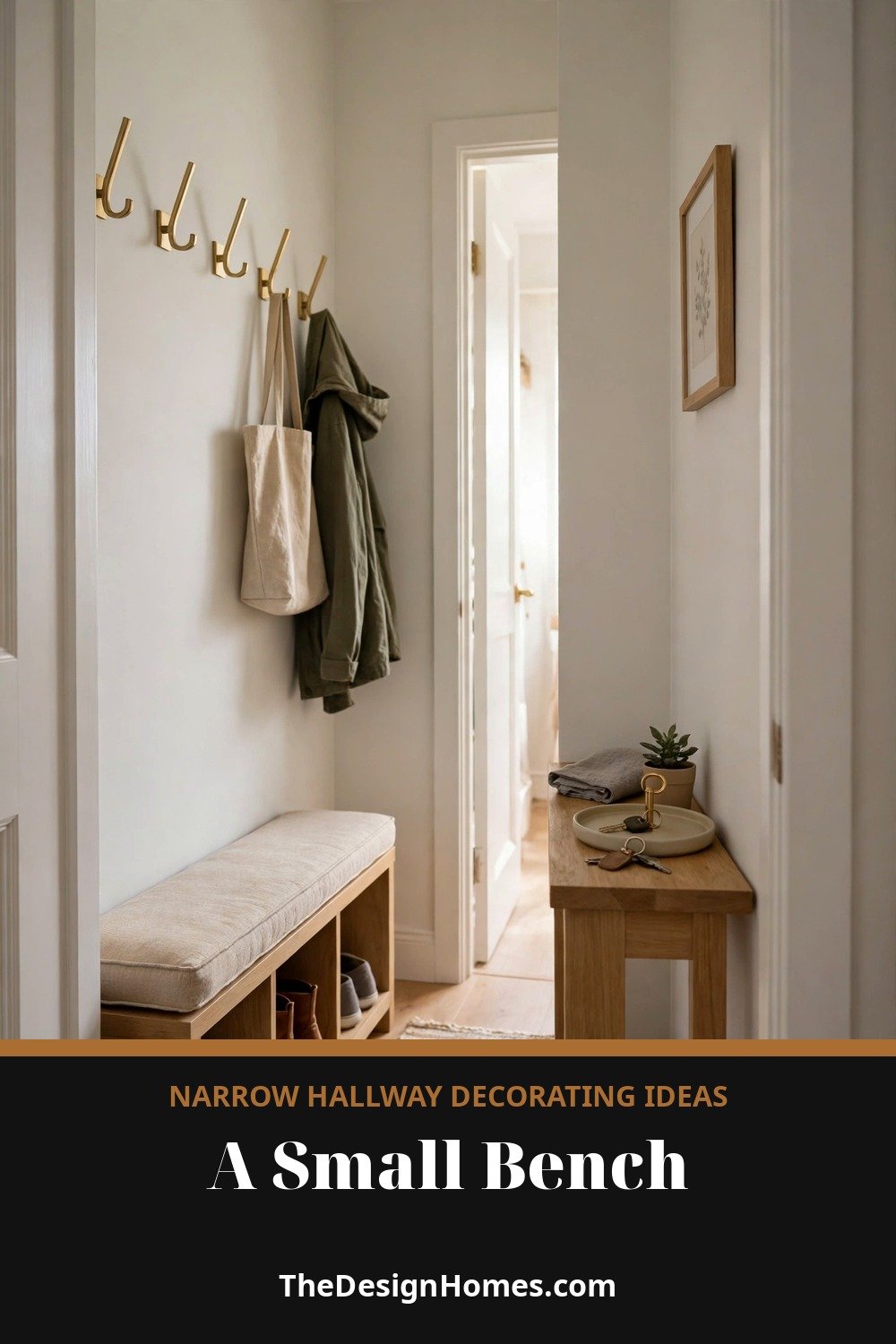
A small bench is one of the most useful pieces in a narrow hallway, giving you a place to sit, a surface for bags, and hidden storage underneath. Choose a slim bench with a lift-up seat or open shelves below for shoes, and place it against the longest wall where it will not block the walkway. A bench makes the hallway feel like a proper entrance rather than a corridor.
Add a cushion in a washable fabric for comfort, and a couple of hooks above it for coats, so the bench becomes a complete drop zone. Keep the top clear except for a small tray for keys, and store shoes neatly underneath. A bench turns the daily routine of leaving and arriving home into something comfortable and organised.
13. Use Patterned Wallpaper

Patterned wallpaper is a bold choice for a narrow hallway, but it works beautifully when used on one wall or in a small section. A vertical stripe makes the ceiling feel higher, while a small-scale pattern adds interest without overwhelming the space. Choose a light background with a subtle pattern, so the hallway still feels bright and open.
Wallpaper the short end wall to draw the eye forward, or paper the wall behind the console table as a feature. Peel-and-stick wallpaper is a great option for renters, since it removes cleanly and lets you experiment. Pair patterned wallpaper with plain, light paint on the other walls so the pattern stands out without closing the space in.
14. Keep It Clutter-Free

A narrow hallway shows clutter more than any other room, because there is nowhere for it to hide. Give every item a home, from shoes and coats to mail and keys, and make a habit of clearing the hallway every evening. A shoe rack, a coat rail, and a small tray for keys keep the essentials organised without taking up much space.
Do a weekly declutter, removing anything that does not belong in the hallway, such as toys, bags, or laundry. When the floor is clear and the surfaces are tidy, the hallway feels wider, brighter, and calmer. A clutter-free hallway also makes the whole home feel more organised, because it is the first and last space you see every day.
15. Add Personal Touches
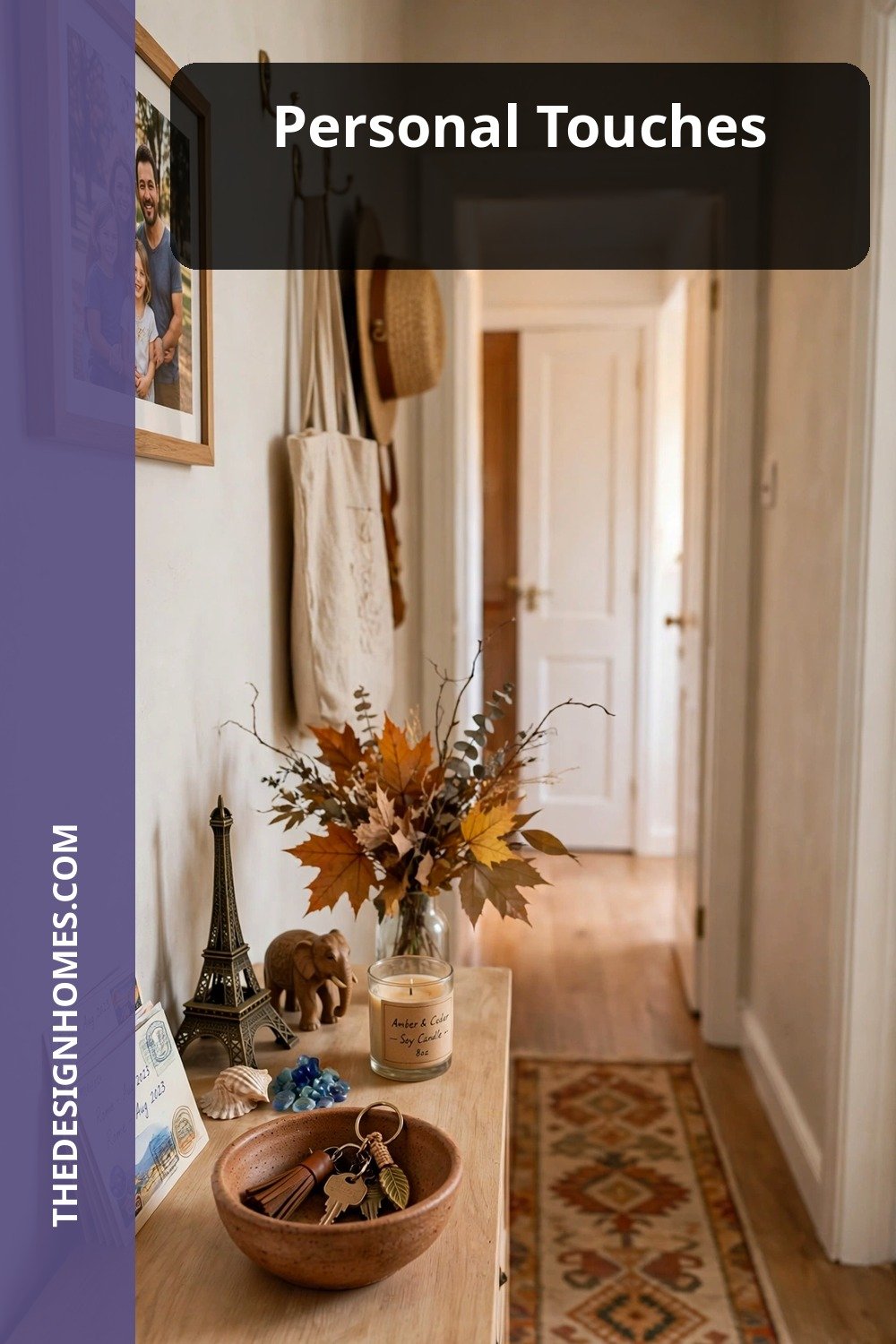
Personal touches are what turn a hallway from a passage into a warm welcome, and they cost almost nothing. Hang a favourite photo, display a small collection of travel souvenirs, or place a handmade bowl on the console table for keys. A scented candle or a reed diffuser adds a welcoming fragrance, while a small rug in your favourite colour makes the space feel yours.
Choose a few meaningful pieces rather than covering every surface, so the hallway feels curated rather than crowded. Rotate the display with the seasons, adding a vase of autumn leaves or a bowl of pinecones in winter. When the hallway reflects your personality, every arrival home feels like a proper welcome, and every guest feels the warmth of your home from the first step inside.
Conclusion
A narrow hallway does not have to be a dull, forgotten corridor. With light paint, a statement mirror, slim furniture, and a few personal touches, it can become one of the most charming spaces in your home. The key is to work with the space you have, using vertical storage, warm lighting, and clever colour to make it feel wider, brighter, and more welcoming.
Start with the simplest changes, like a fresh coat of paint and a runner rug, and add the rest one idea at a time. Each small improvement makes the hallway feel more like a room and less like a tunnel, until one day you realise it is your favourite part of the house. A well-decorated hallway sets the tone for everything beyond it, so it is worth every bit of effort.
Frequently Asked Questions
How do I make a narrow hallway look wider?
Paint the walls a light colour, hang a large mirror on one long wall, and keep the floor clear of clutter. A runner rug with a light border, slim furniture with visible legs, and good lighting all help the hallway feel wider. Avoid dark paint on the long walls and bulky furniture that blocks the walkway.
What is the best colour for a narrow hallway?
Soft white, pale grey, warm cream, and light pastels work best, because they reflect light and make the walls feel further apart. Use a bolder colour on the front door or one short end wall for personality, and keep the long side walls light. Test paint samples in the hallway itself, since narrow spaces get less natural light.
What furniture works in a narrow hallway?
Choose slim pieces no deeper than twenty-five centimetres, such as a narrow console table, a slim bench, or a wall-hung shoe cabinet. Furniture with legs keeps the floor visible and the space feeling open. Avoid anything round or deep that sticks into the walkway, and measure carefully before buying.
How can I add storage to a narrow hallway without blocking it?
Use vertical storage like tall slim cabinets, wall hooks, peg rails, and shelves above head height. A bench with shoe storage underneath and a console table with a drawer both add storage without blocking the walkway. Keep only daily essentials in the hallway and store seasonal items elsewhere.
How do I light a dark narrow hallway?
Layer warm wall sconces, a ceiling light, and a small table lamp on the console for even, flattering light. Choose warm white bulbs around 2700K, and hang a mirror opposite any door or window to bounce light around. Battery-operated sconces are an easy option if you cannot wire new lights, and a dimmer switch lets you adjust the mood.

